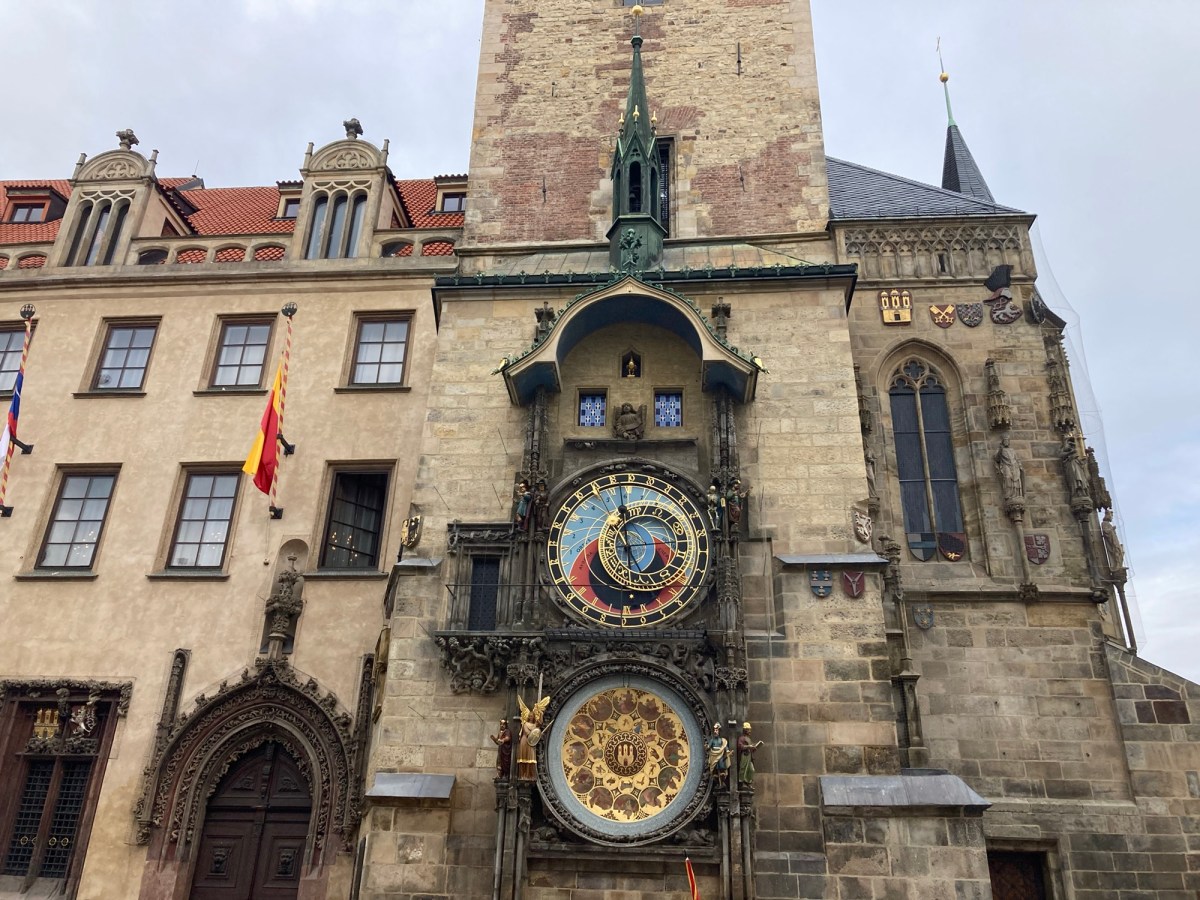
Thursday, October 12th, 2023:
Around 22:00 (10 PM), my plane landed in the Czech Republic. It was 15 C (59 degrees Fahrenheit) outside in Prague 6, and raining. After I got off the plane, I started walking towards the airport exit. I encountered signs in Czech (language). By 22:18, I was standing outside of the airport waiting for a bus to come. It was about a 16 minute ride to the metro station.
By 22:43, I was in the metro station. There was an odd sign on the inside of the metro in the Czech language (it was quite hilarious, actually. This was an advert for AlzaPlus, which at the time, I believed was for medication. It is an e-commerce business). By 22:59, I was off the metro. I had to ride up a very long escalator up to the main street, and when I came out, there was a large church (The Basilica of St. Ludmila). I was on Náměstí Míru Street. This was in Prague 2.
I saw some trams running, but it was only about a 10 minute walk to where I needed to go. I was inside by 23:13, and then I went to look for a restaurant since I was hungry. So by 23:55, I was on my way to a restaurant that was only a 4 minute walk away from where I was staying. The place I came across was called “Kafárna Na Kus Reci”. I had to stand outside and Google translate the menu, but I saw that they had pizza and burgers which was not hard to translate. I could read words such as dessert, gnocchi and risotto.
Once inside, I ordered a beer. There were only a couple other people inside of the restaurant. I think they were playing cards. I ordered a pizza and it arrived by 00:17.
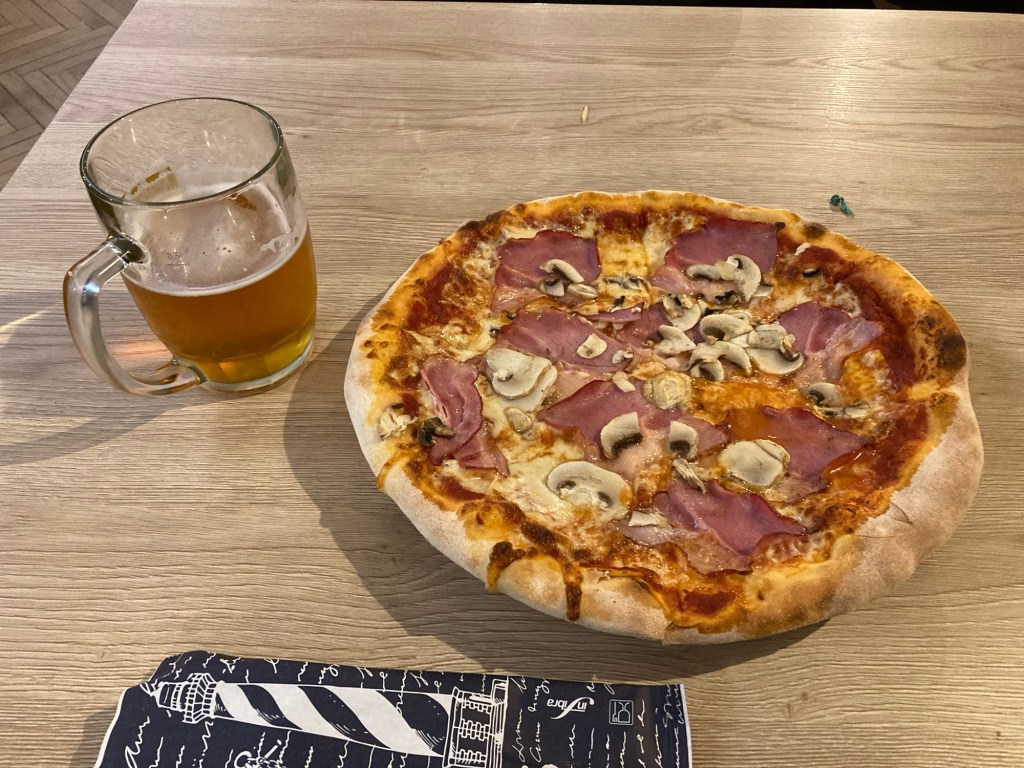
By 00:43 I had left the restaurant, however, after walking out and returning to my place of accommodation, I realised that I no longer had my key. I happened to walk back to the restaurant before it closed and someone was cleaning the bathroom, an older lady who I thought was the cook. Before I left, I used the toilet and the waitress who served my pizza had saved my key card for me. I didn’t even have to ask.
After returning to my hostel, I fell asleep about an hour later, I believe. I researched some things about Czech regions (Bohemia, Moravia and Silesia) and why the Czech Republic kept the flag after the split with Slovakia (because they wanted to).
Friday, October 13th, 2023:
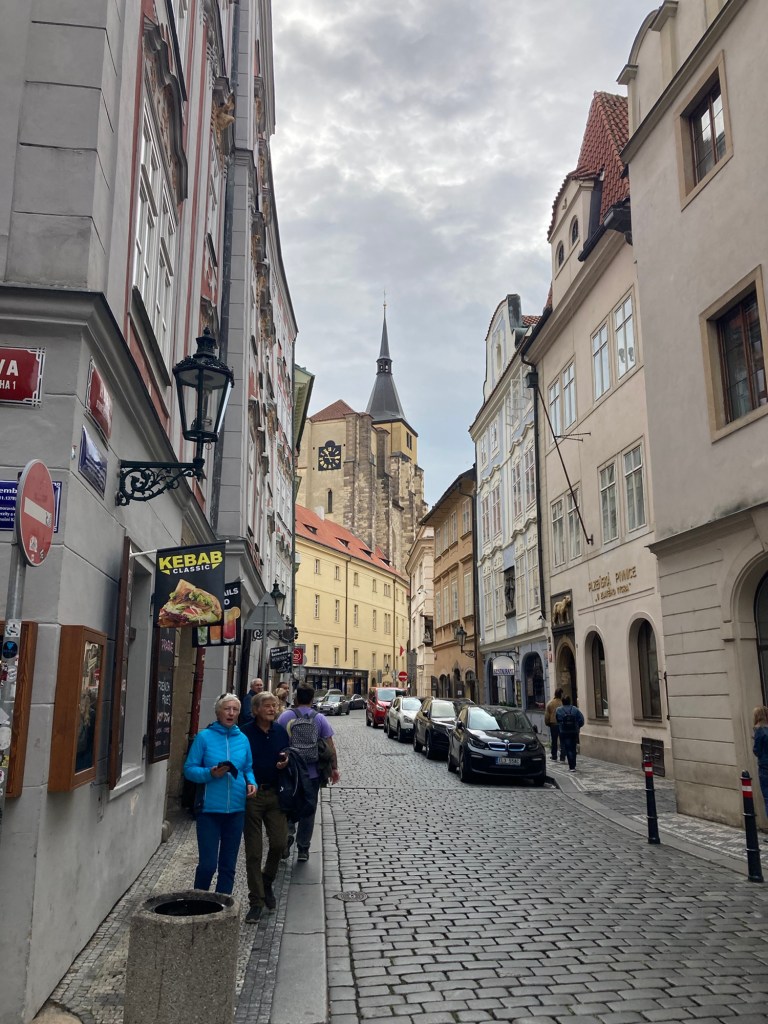
This day, I showered and left my hostel at around 09:14 in the morning. It was my first time seeing Czech in the daylight. This day in Prague, it was particularly warm. It was 16 degrees Celsius (61°F). The high that day was 25 degrees Celsius (77°F). I decided to walk down to the Powder Gate Tower (Prašná brána) since that was what I desired to see most. It was a 34 minute walk according to the map on my phone.
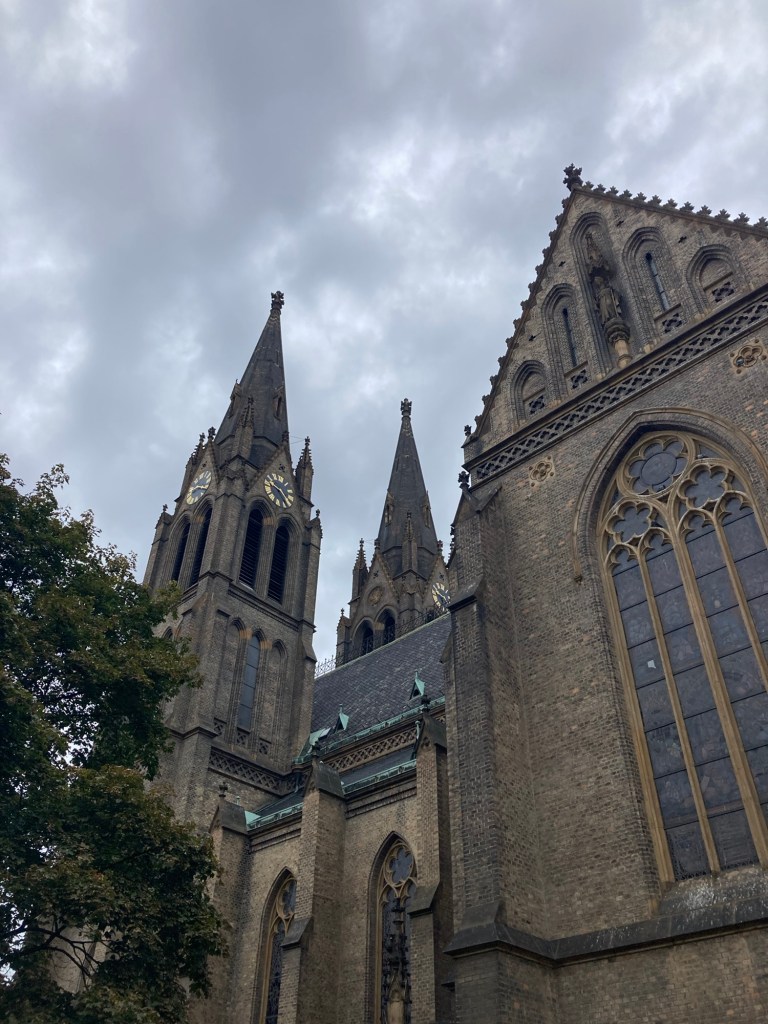
I eventually passed by the church I had seen the night before once I exited the metro. It was amazing.
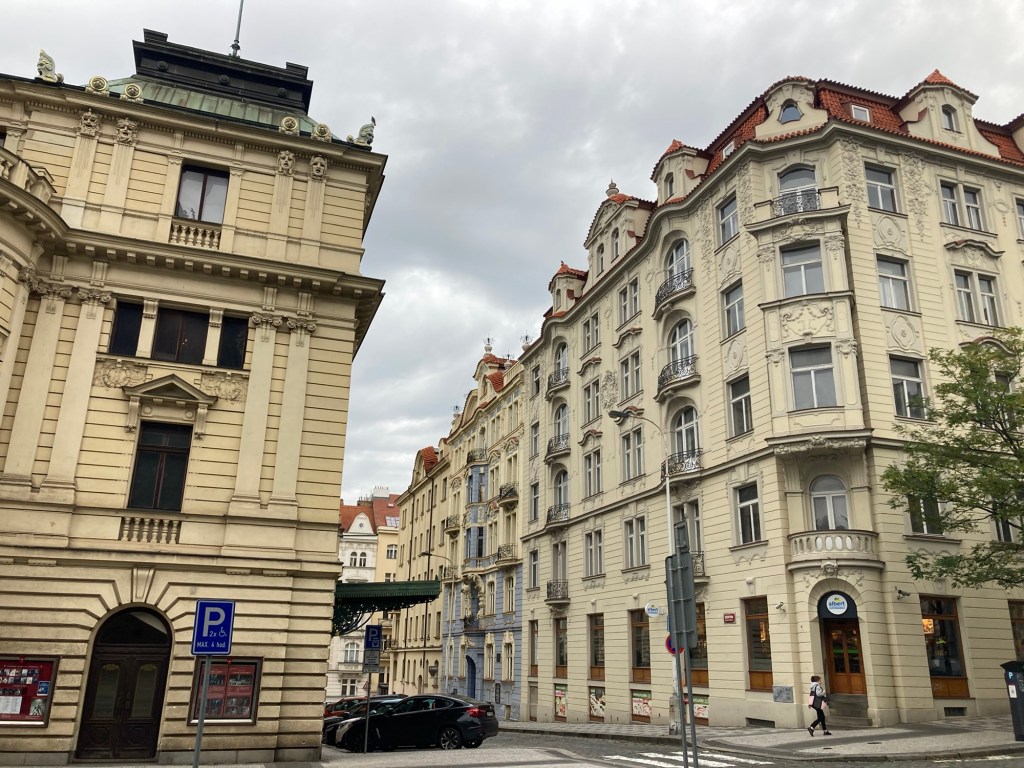
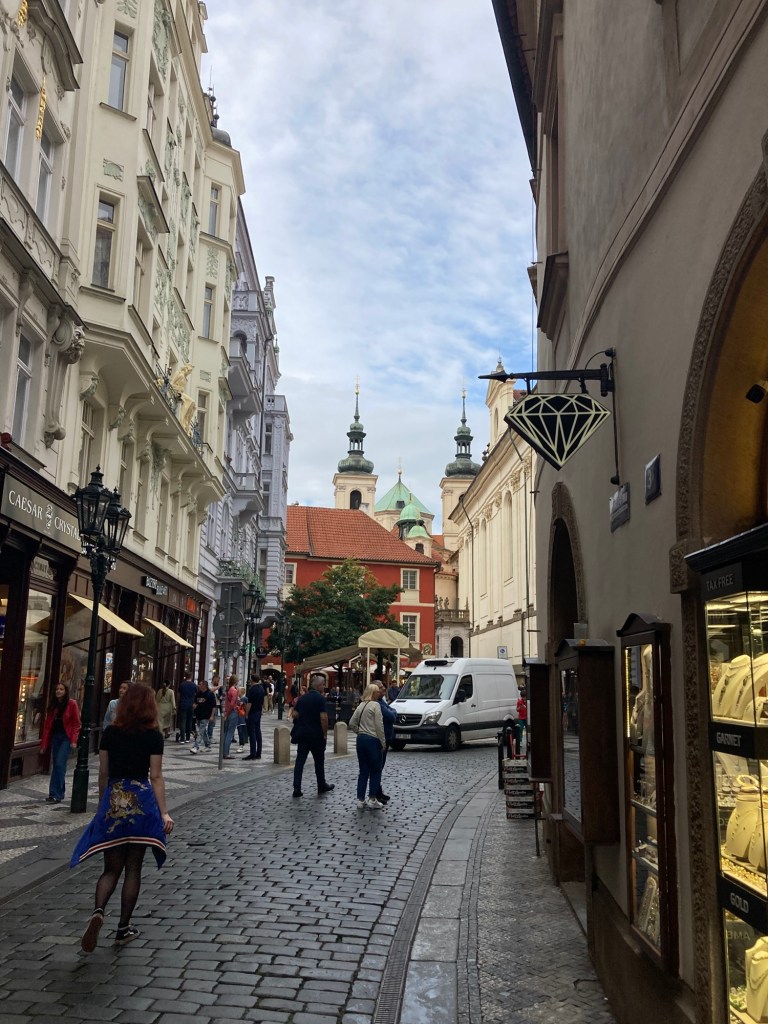
The buildings around reminded me of the ones in Paris. Also much more colourful than I would have imagined; a lot of detail everywhere.
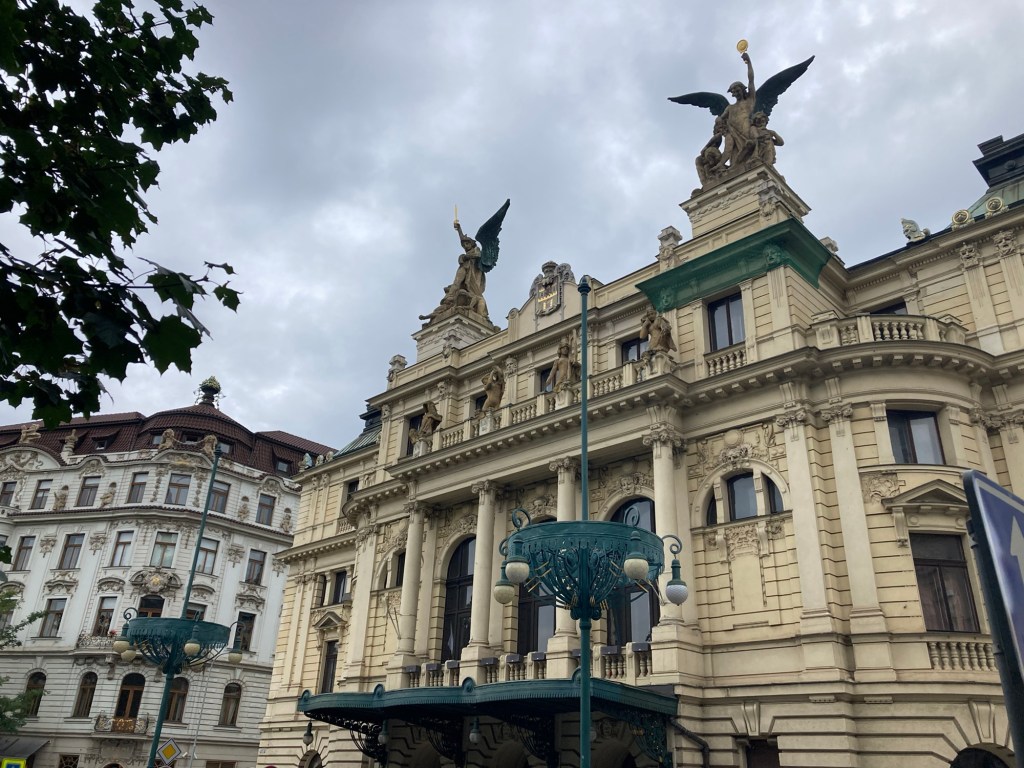
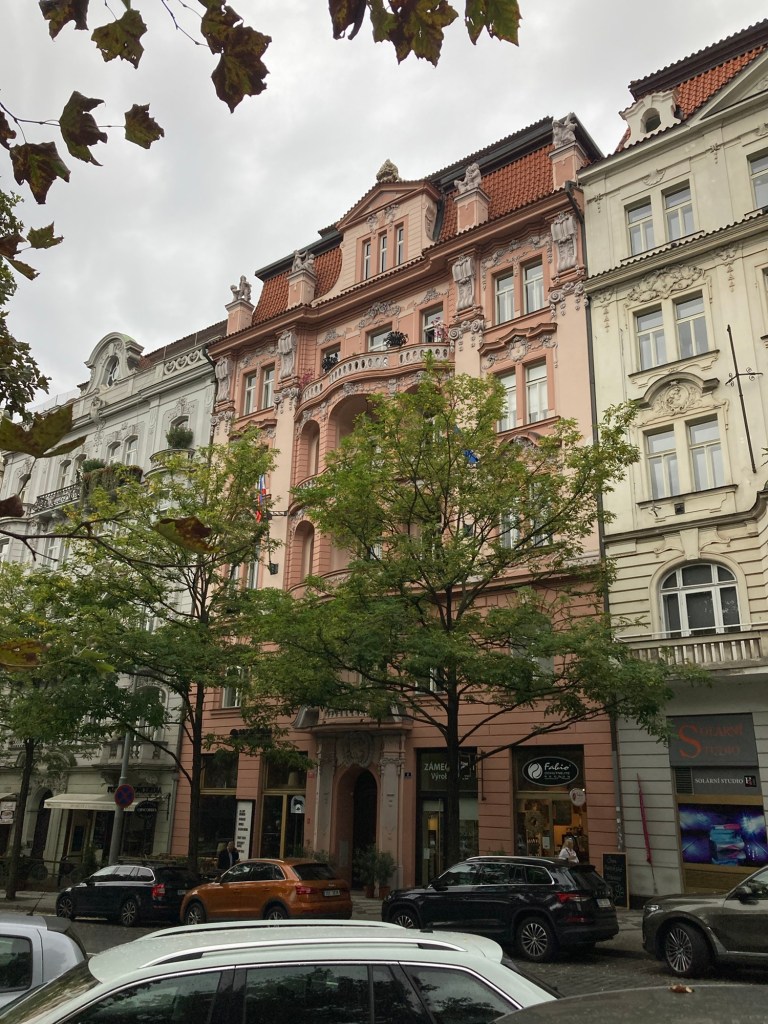
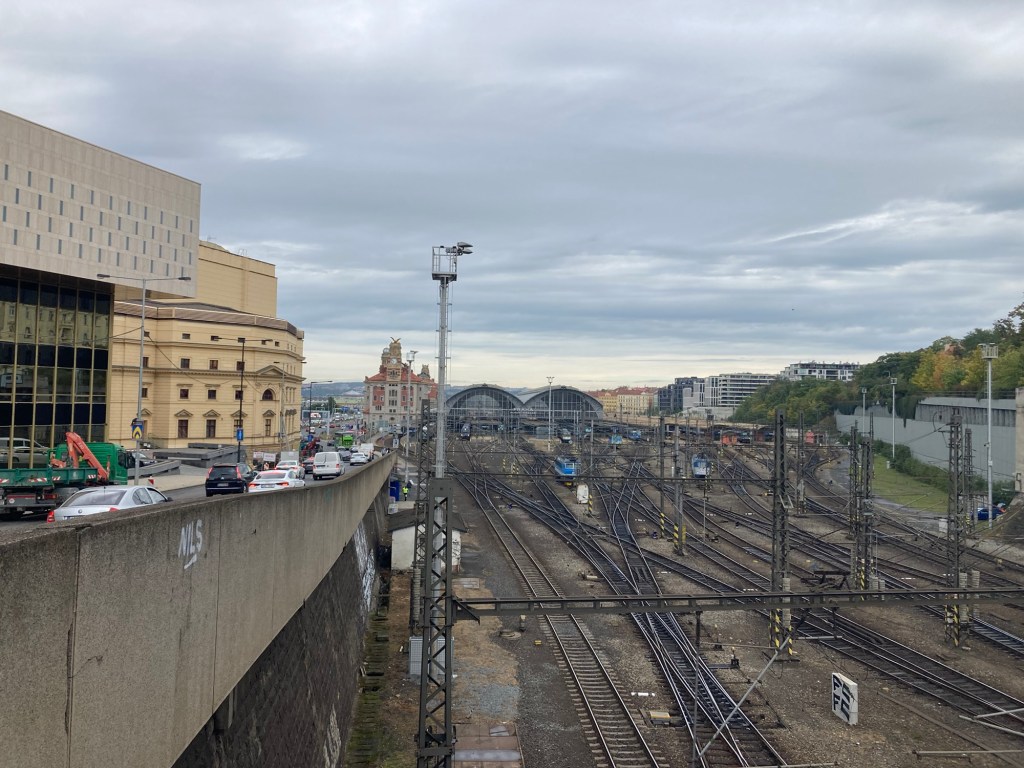
I passed by the main train station (Praha hlavní nádraží), which was just behind the National Museum (Národní muzeum) and Wenceslas Square (Václavské náměstí).
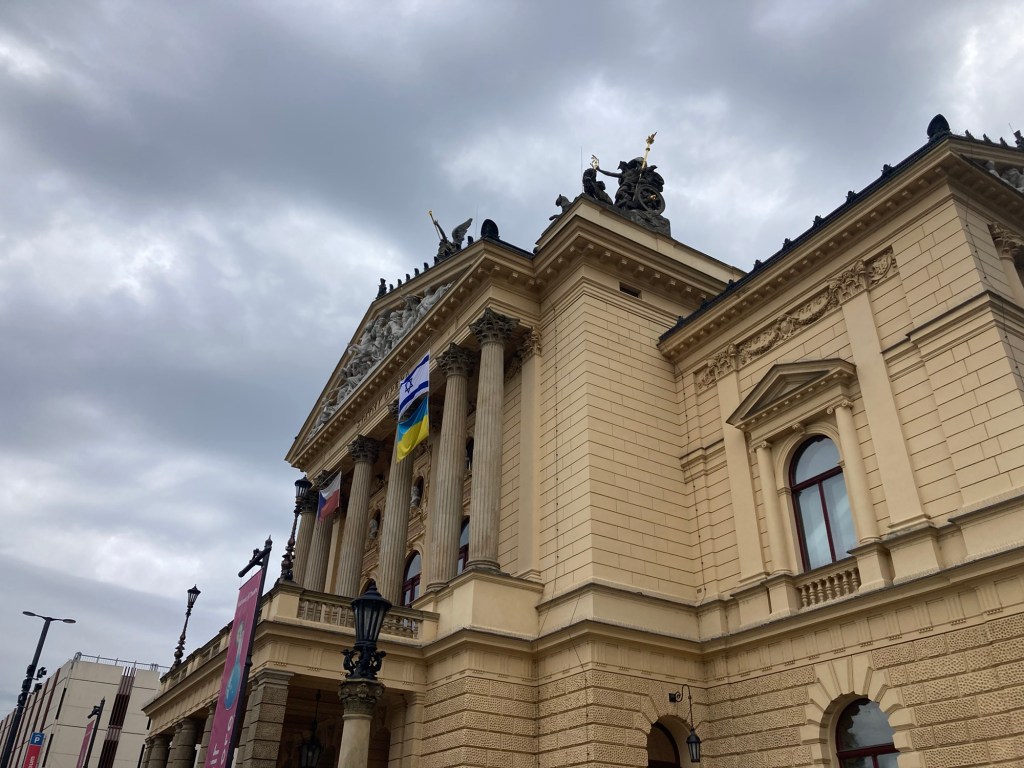
I eventually passed by a building which had a Czech flag hanging from it’s left side, and an Israeli flag hanging on it’s right side, with a Ukraine flag hanging underneath it (for context: this was six days after the attack on Israel by Hamas, and about a year and eight months post the beginning of the conflict in Ukraine).
I walked through the square, which was quite busy, then eventually turned on a street on the right, where I could see a tower (the first of many). It, however, was not the Powder Gate Tower; this was Henry’s Bell Tower (Jindřišská věž). In its vicinity was a church.
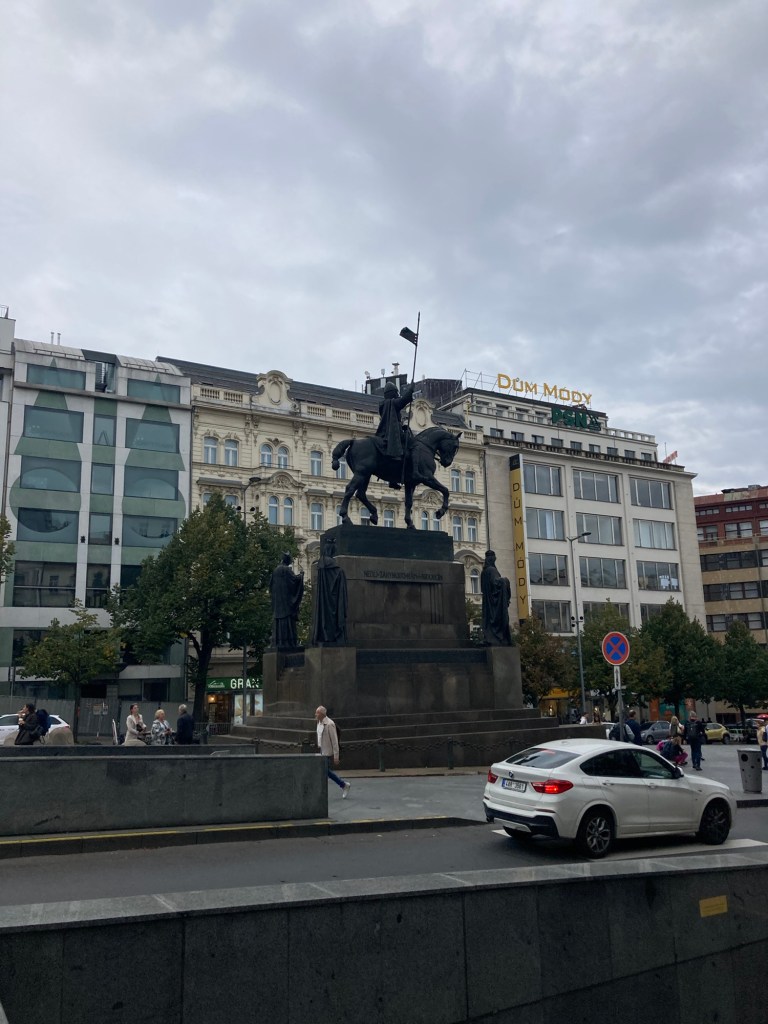
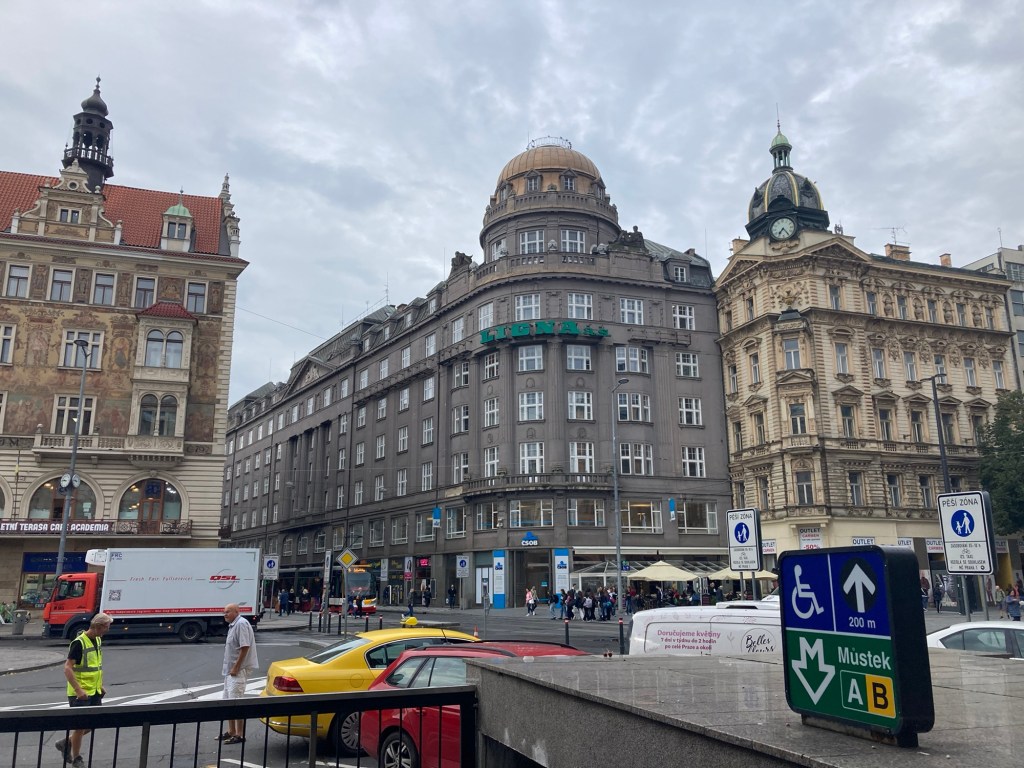
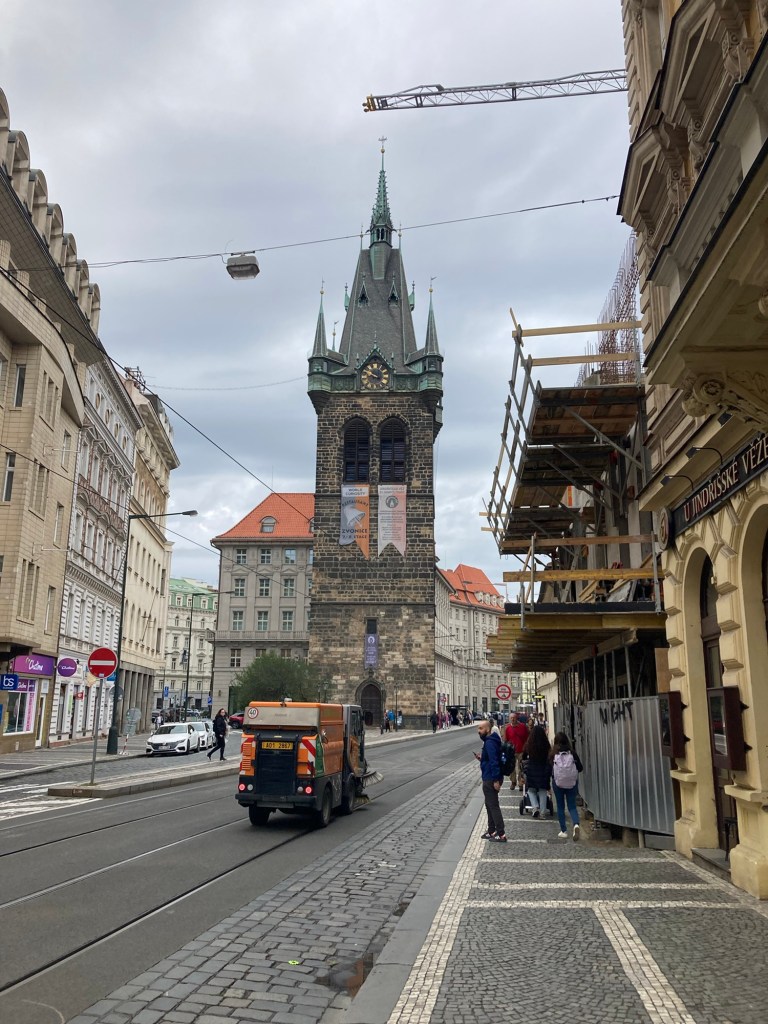
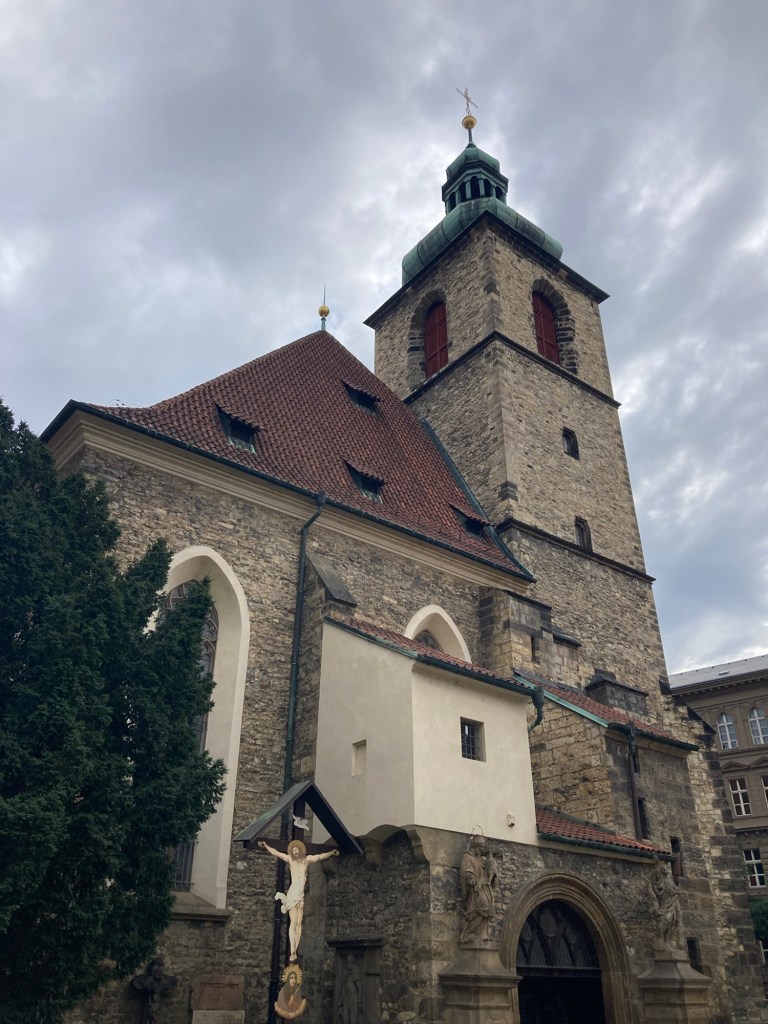
A man I was walking towards was holding his son in his arms when I asked me if I could take a picture of them in front of the tower. I gladly agreed. I wanted a picture from him too, but he left.
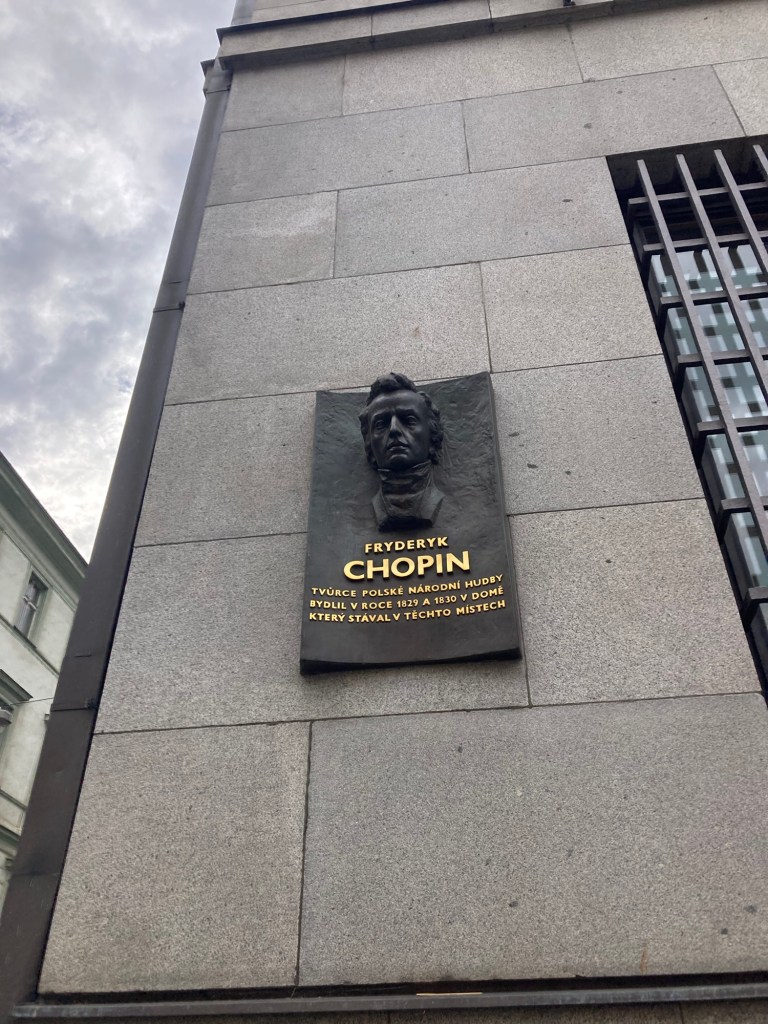
I continued walking until I came across a plague of Fredrick Chopin hanging on a building corner wall (apparently, he used to live in this building, whose space is now occupied by a bank). Then, there was the tower; the Tower of Powder, along with the Obecní dům (the municipal house, which houses a famous concert venue).
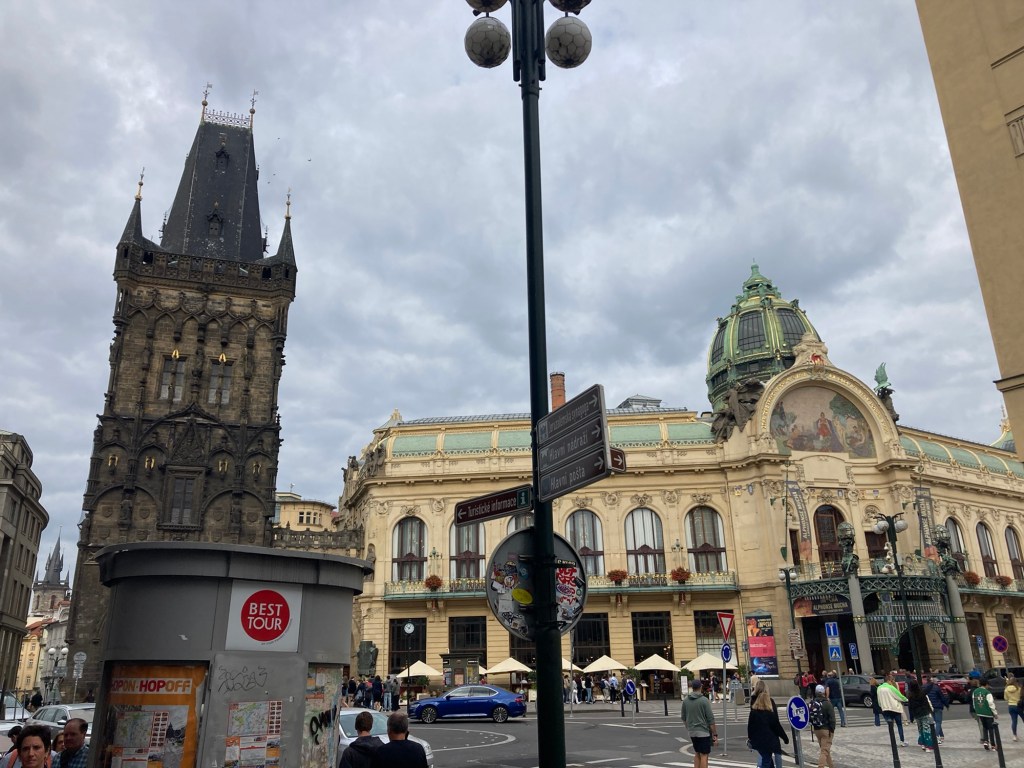
I stood around and admired the building for a while. It’s easily one of my favourites in Prague.
I probably spent at least 15 minutes taking it in. I had even stopped at one point to just stare at it for maybe about two minutes.
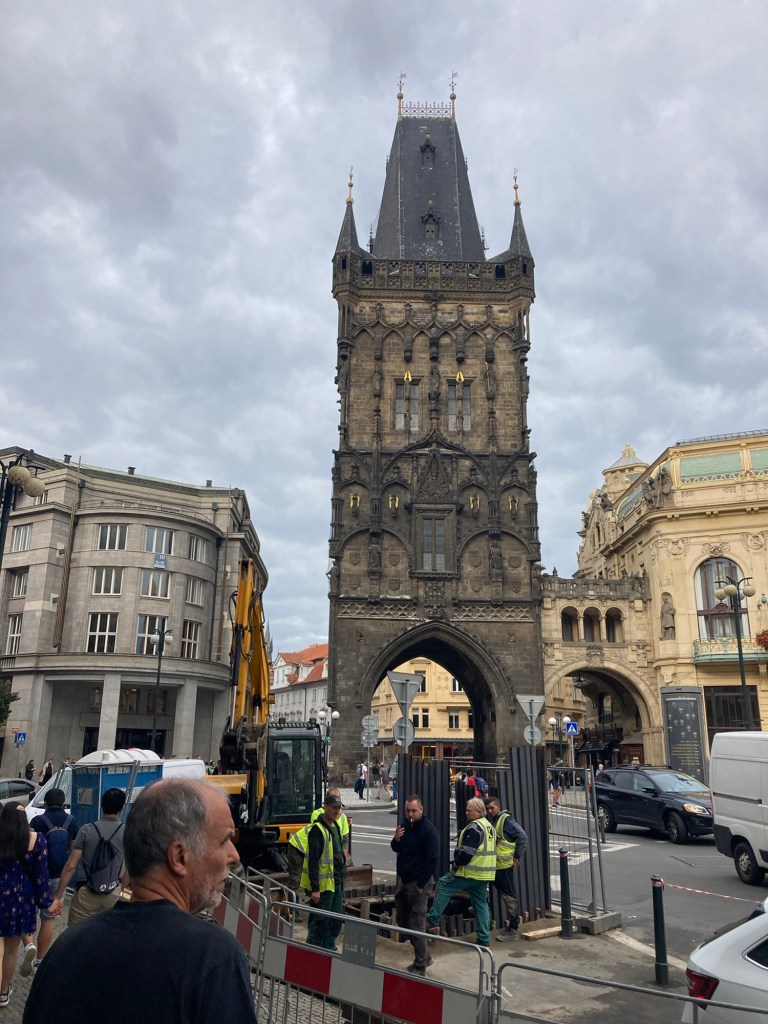
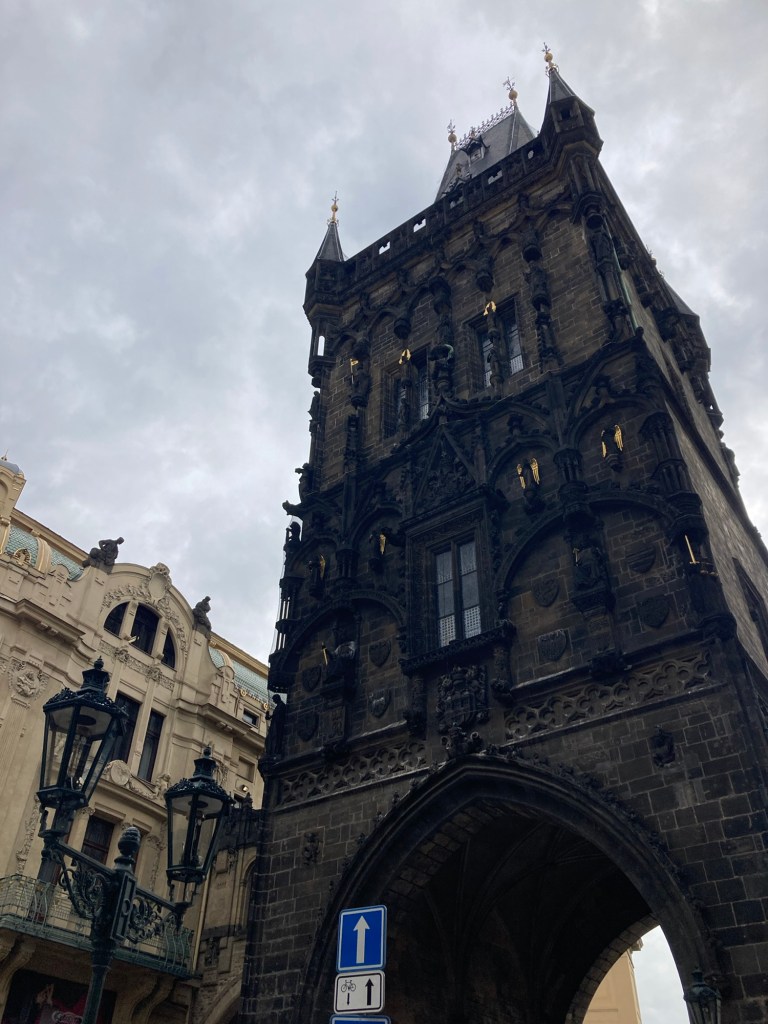
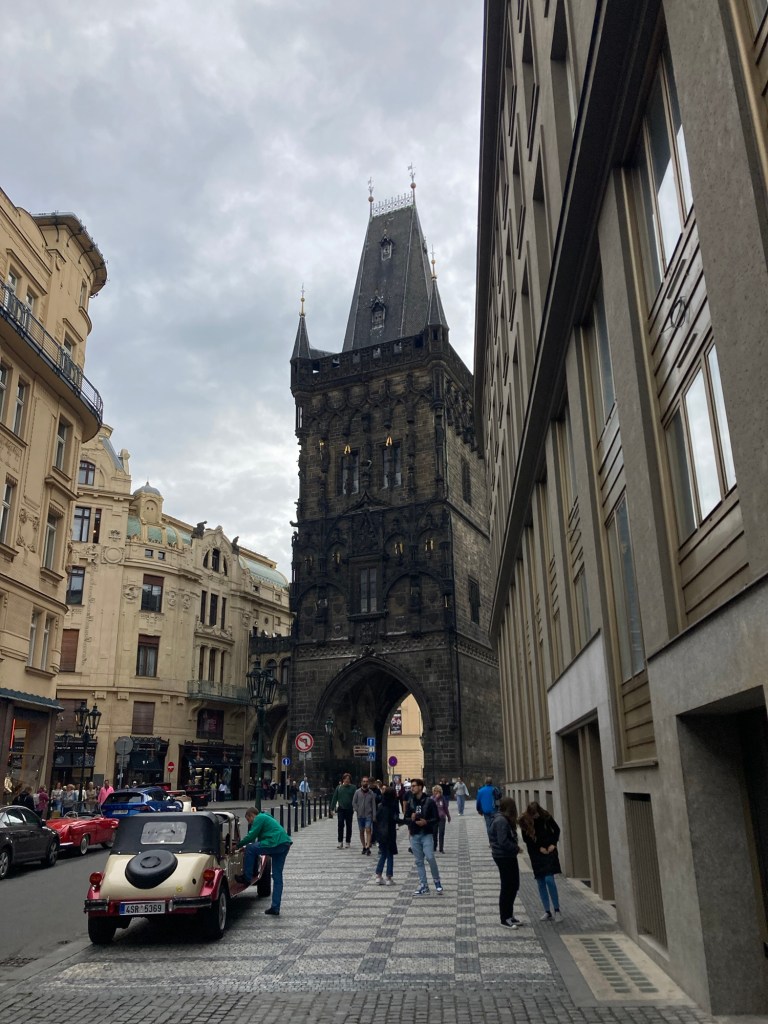
This gate is where the beauty of Prague really opens.
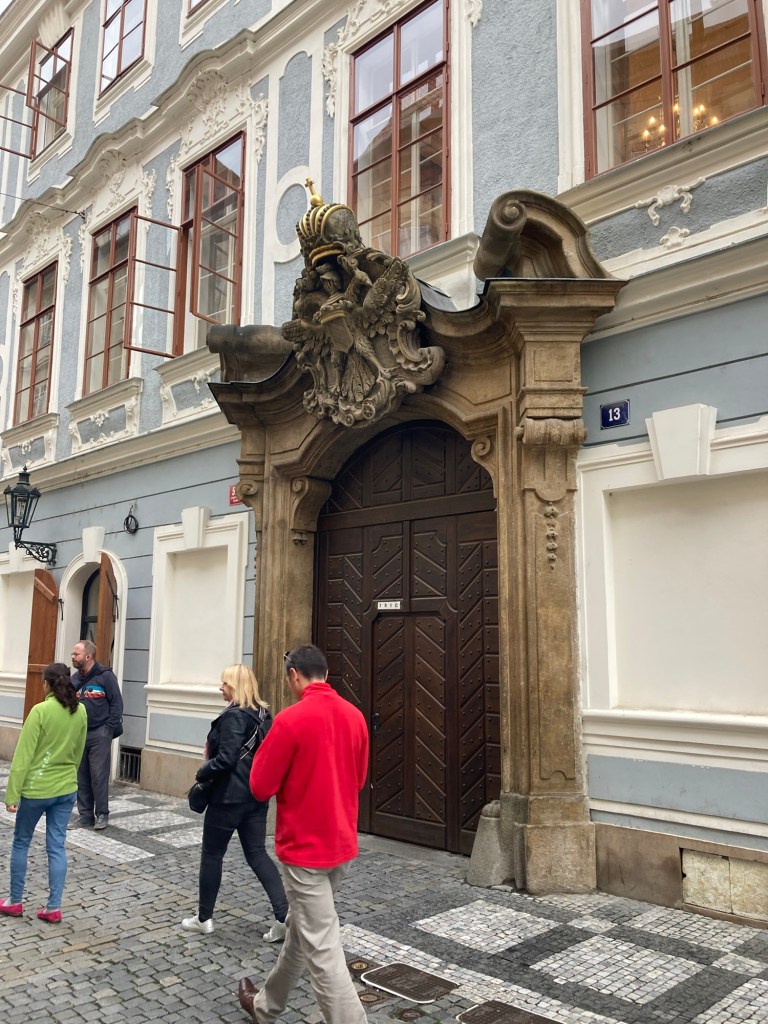
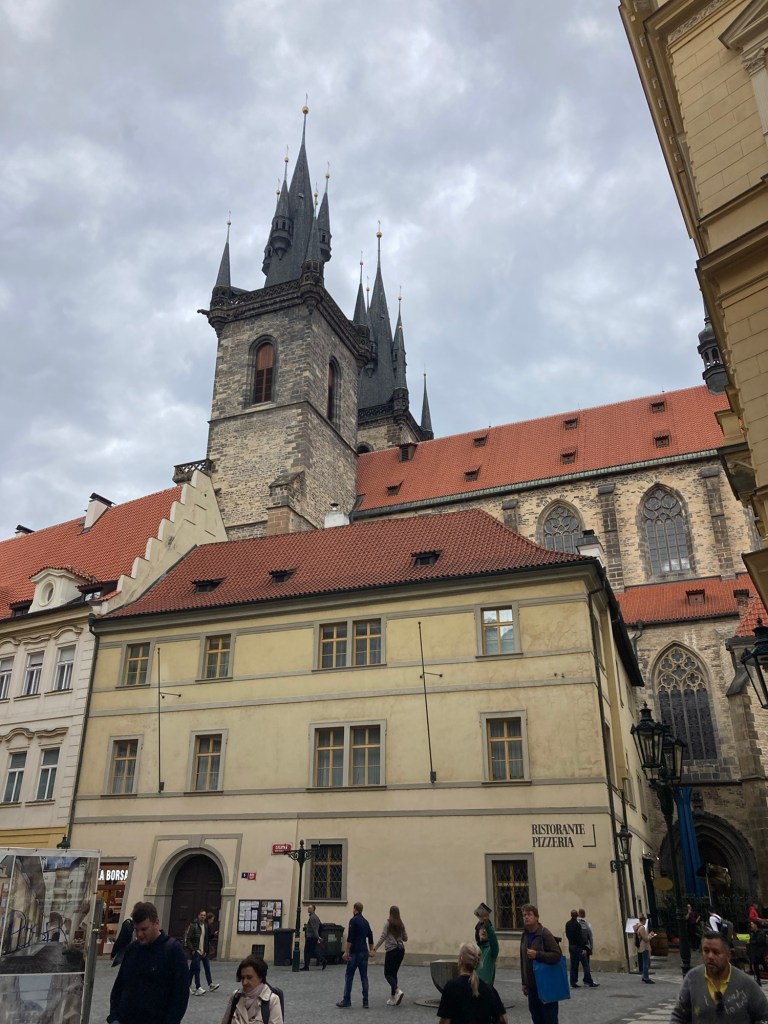
I saw a map of Czechoslovakia in a bookstore window. I passed by the Museum of Torture. From here, I saw the top of the Church of Our Lady before Týn (Kostel Matky Boží před Týnem).
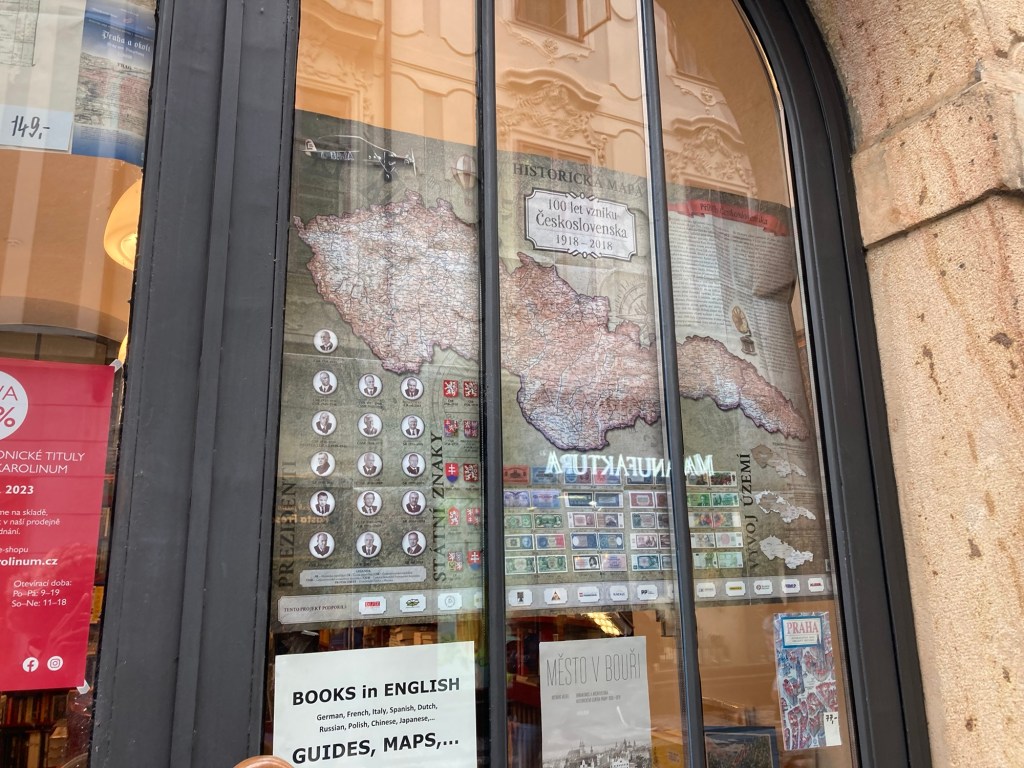
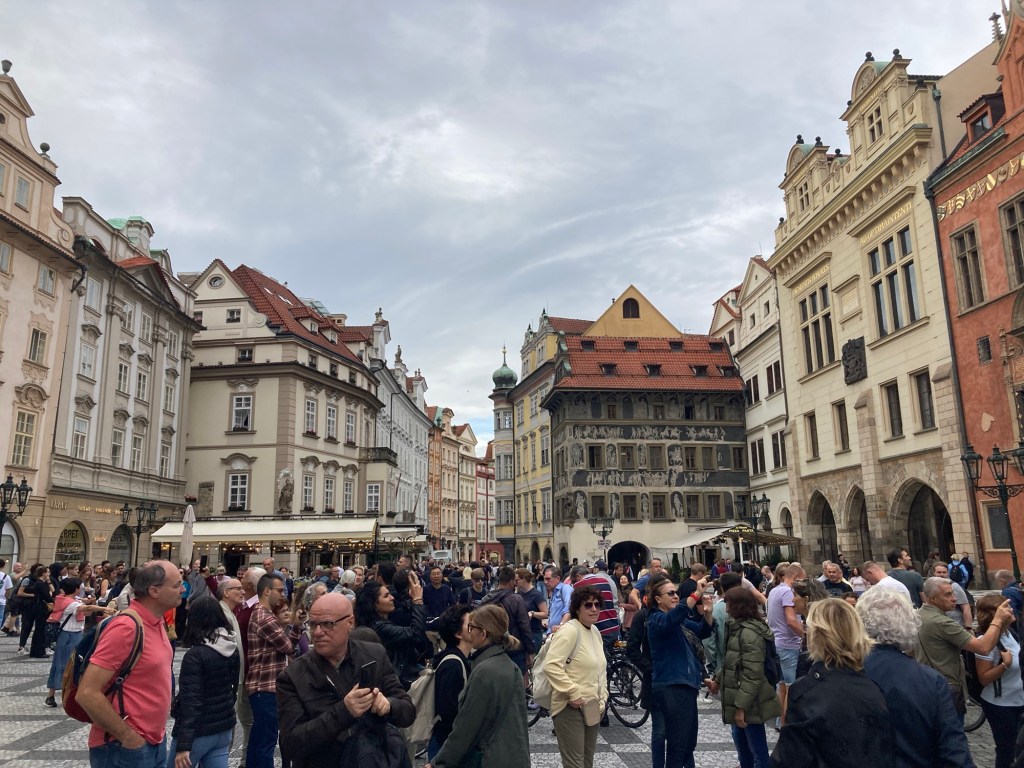
There was Madame Tussaud’s, a famous wax museum. Then I saw another tower. This time, it was the one that had the astronomical clock (Pražský orloj) attached to it. As I inched closer, I knew the big reveal was coming; this was the Old Town Square (Staroměstské náměstí).
Even from the front, the Church of Our Lady before Týn was still largely hidden. This has to do with the way Prague was built.
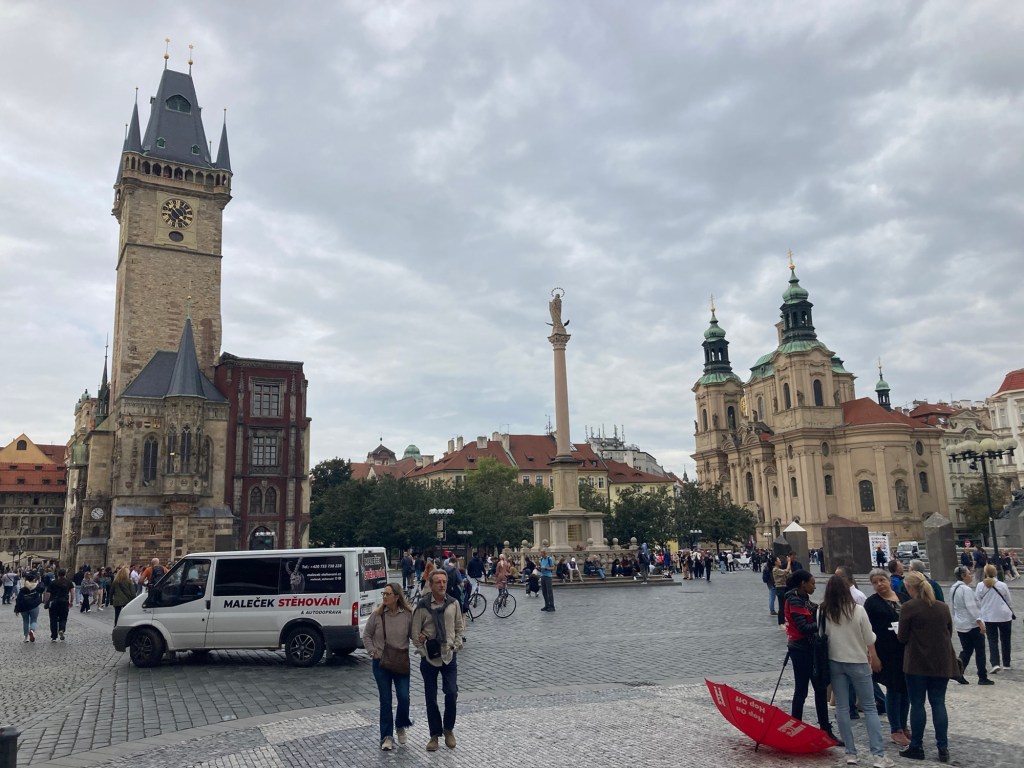
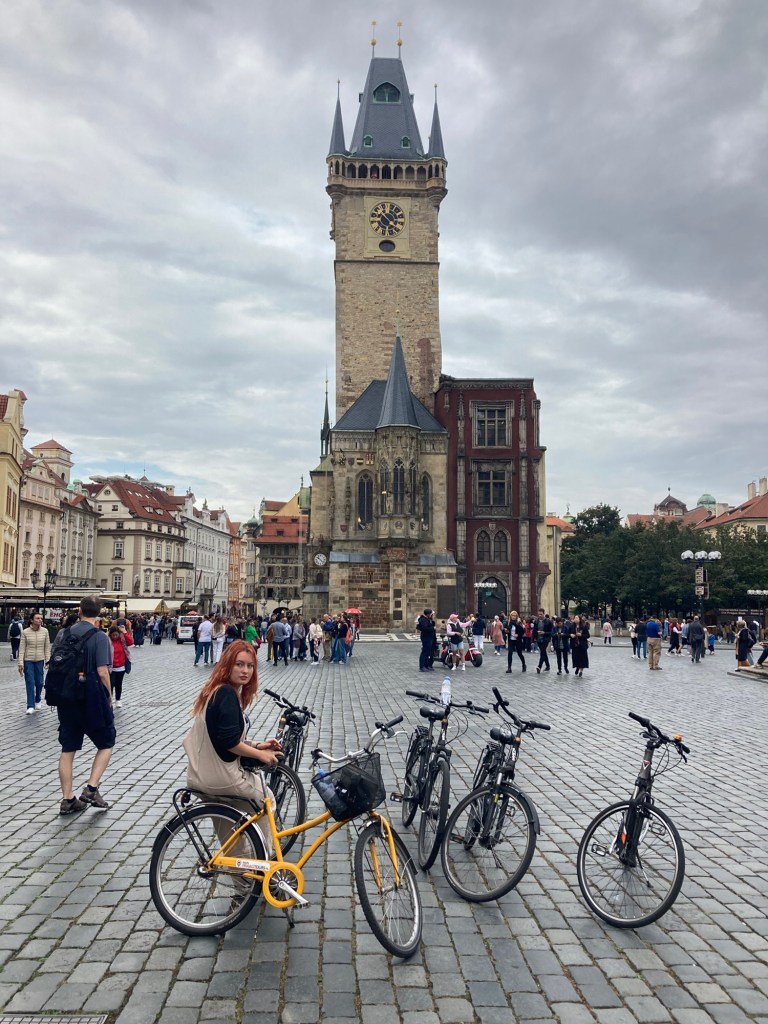
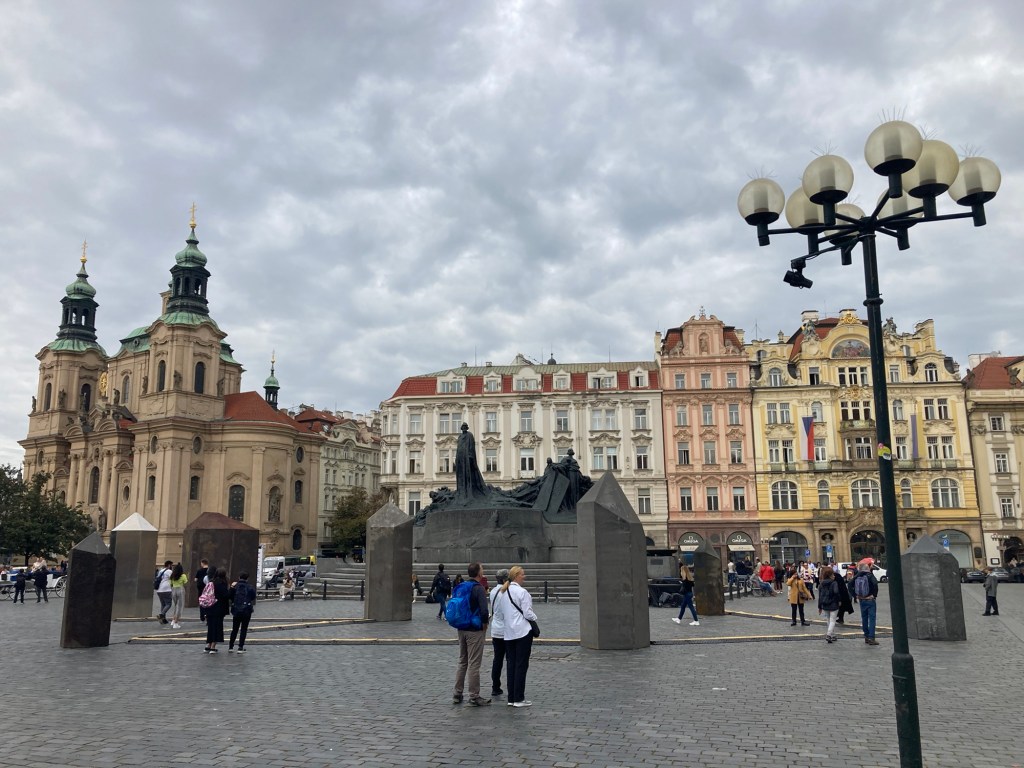
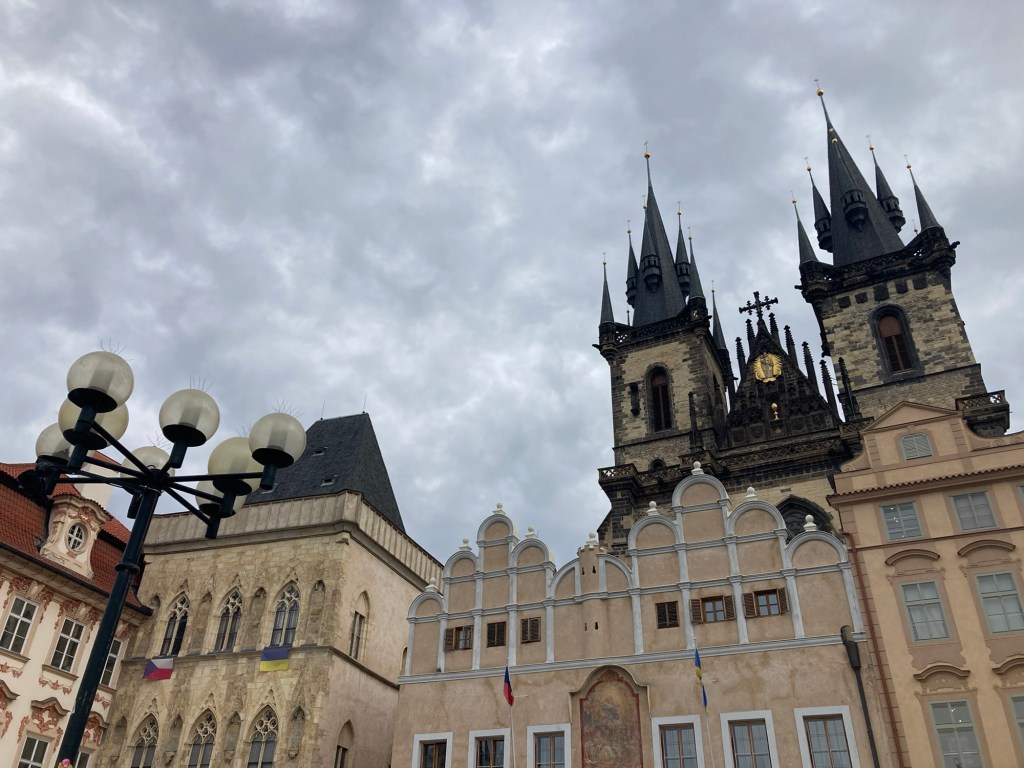
At 11:00, the town had stopped to watch the clock ring.
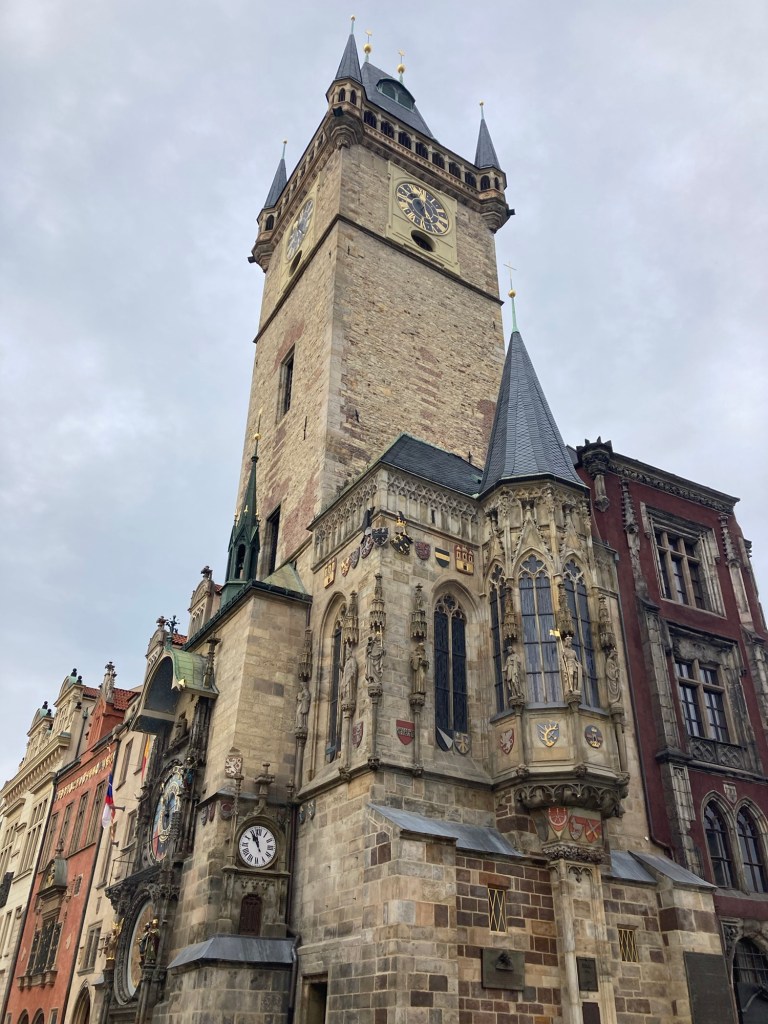

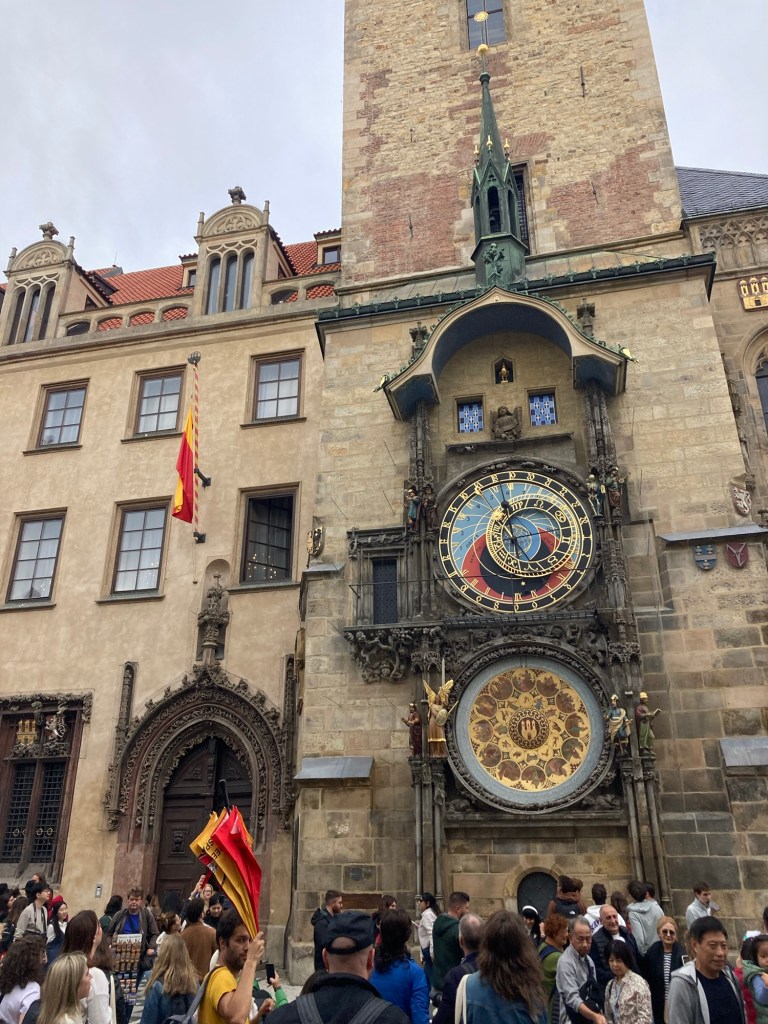
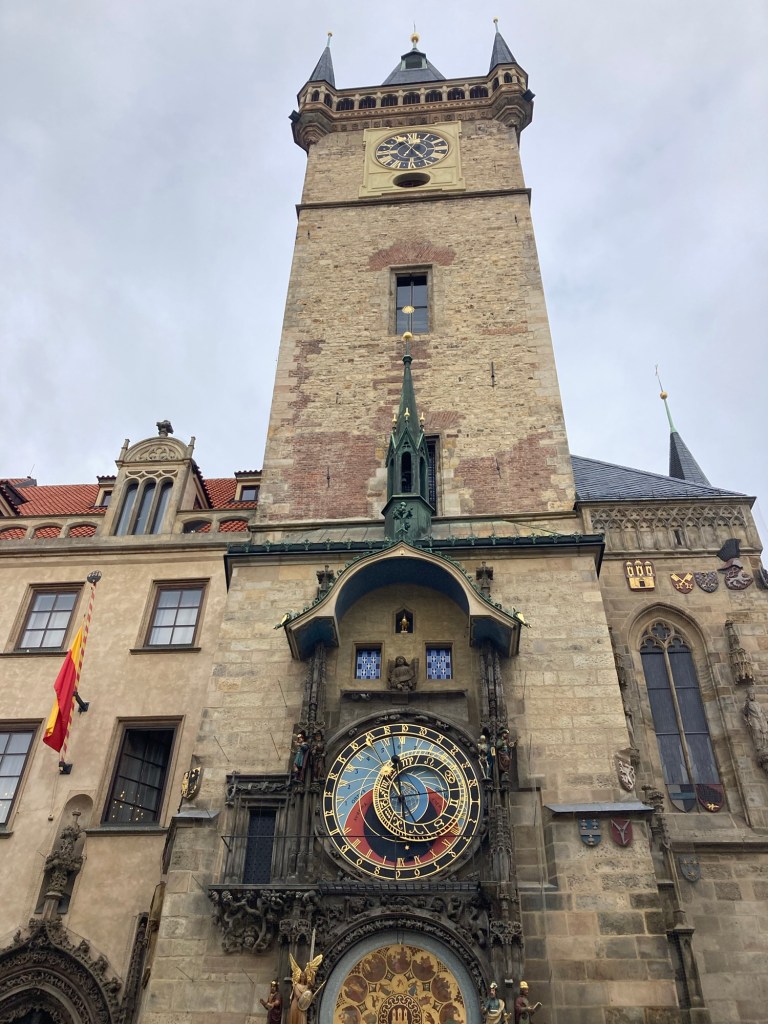

The clock itself was installed in 1410, making it the oldest functioning astronomical clock in the world. Every hour, a procession begins; a small show. This is known as “The Walk of the Apostles”. Twelve statues representing Christ’s twelve apostles (Paul of Tarsus replacing Judas Iscariot) gaze out at the crowd from two small windows embedded in the clock structure, two by two, which is preceded by a performance from an animated figure of death. Death is represented by a set of bones; a skeleton, who rings the bell of time.
There is Vanity, who holds a mirror of self. Next to him is Greed, a niggardly man who keeps his bag of gold close to his own chest, tightly. The Turk stands next to Death. He is one who simply just enjoys life and goes about his day, strumming away at his mandolin, avoiding any kind of vexatious rhythms of life. He, the Turkish figure, represents lust and hedonic pleasure, not knowing, or at least refusing to acknowledge, that time, and death, is coming for him, inevitably and invariably.
As the bell of time rings, all the ‘sinful’ figures shake their heads, “no”, as they are unwilling to go. This is a testament to the figment, the seemingly erratic nature of time, and the unwillingness of man to die. Put simply; the transient nature of life.
At the end of the procession, the cock crows, the sounds fade away, and the windows close. The show lasts about forty-five seconds. Occasionally, a trumpeter may play from the tower top.
I eventually managed to push past the crowd, and I started walking towards Charles Bridge about 15 minutes after the procession had begun. It was about a nine minute walk.
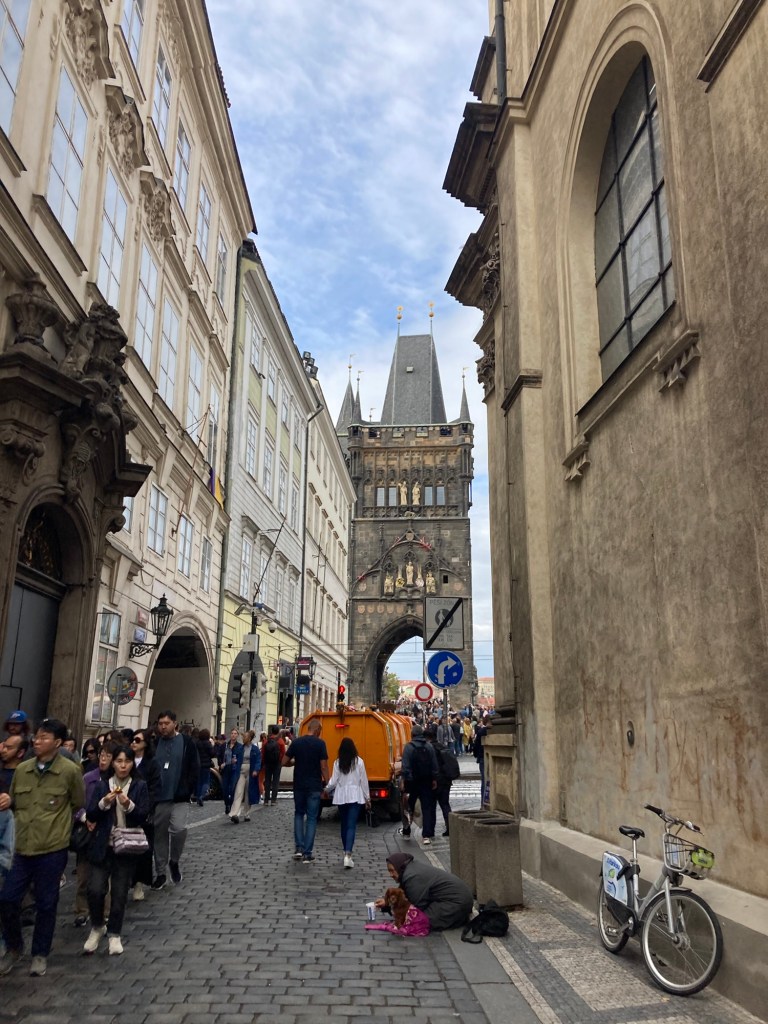
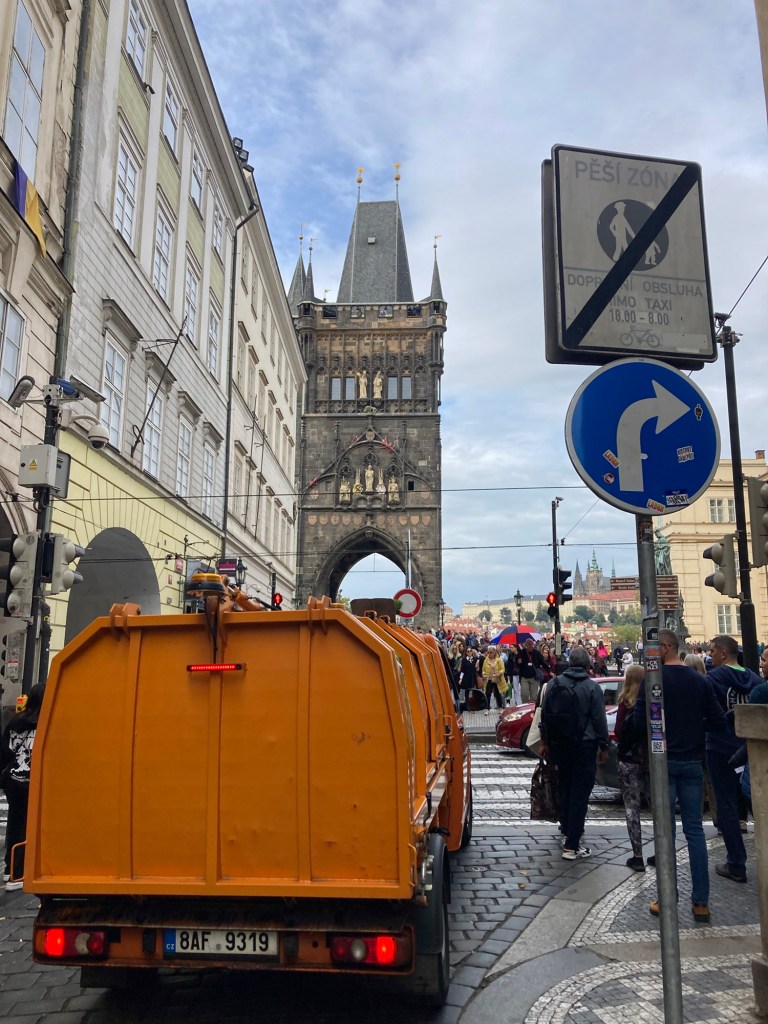
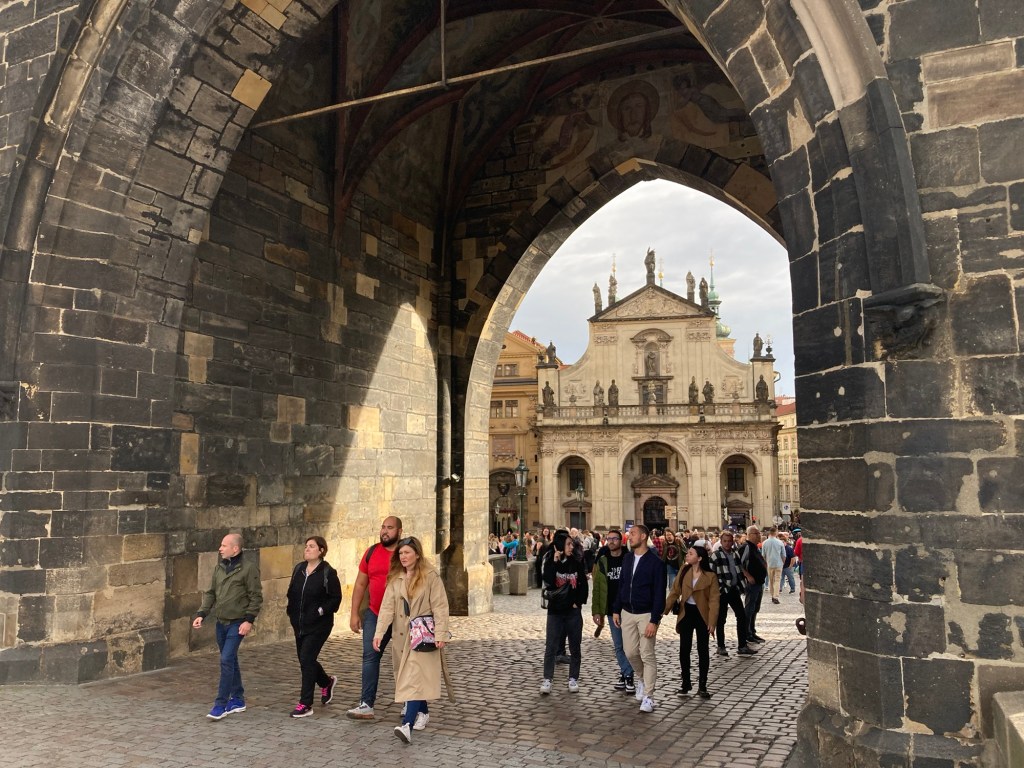
Upon approaching the gate to the bridge, one could see Prague Castle. There were some black men dressed up as sailors, holding what seemed like newspapers, but masqueraded as advertising for the boating company they worked for. This truly made them characters. They stood out among the crowds not only for the colour of skin (which honestly, wasn’t much darker than mine), but for the ridiculous nature of their nearly pure white outfits.
Nearing the entrance of the bridge, almost below the gate, I could see the nature the city had to offer. The hills on the other side of the river were covered with trees.

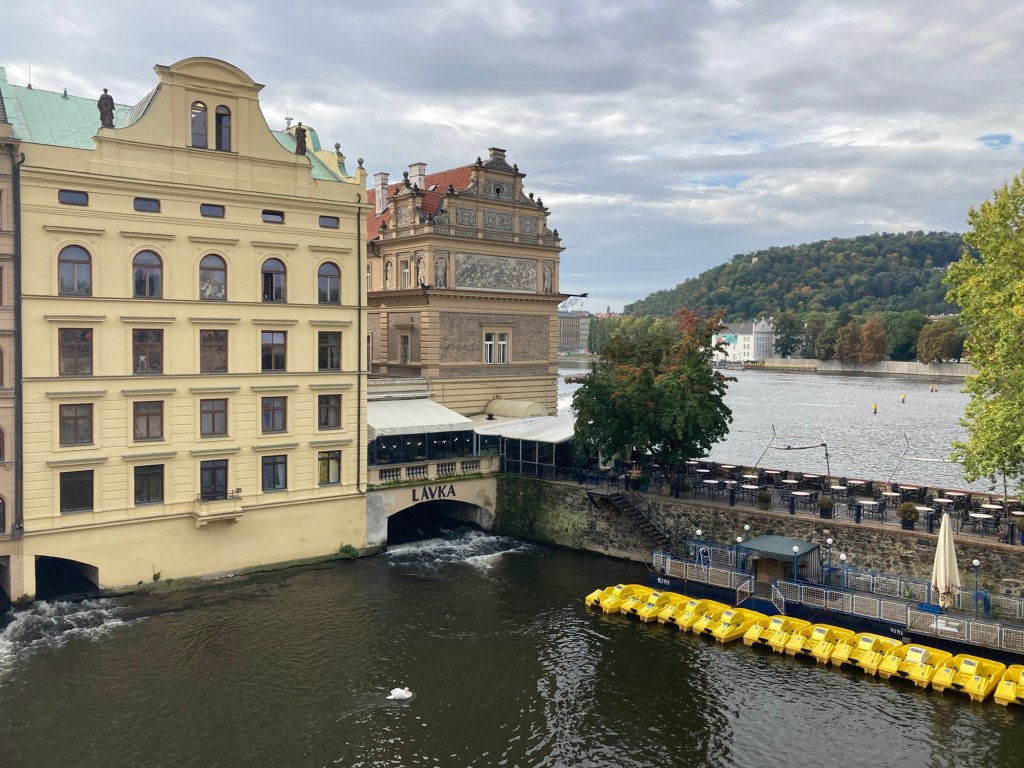
Nearby, there was a statue of Charles IV (located in Křižovnické Náměstí, or Křížovnické Square) who was born in Prague, and who died in the same city. He ruled as the Emperor of the Holy Roman Empire for twenty-three years and ruled as King of Bohemia (the region Prague is in) from 1346 until his death in 1378. He founded the first university in Central Europe, Charles University, two years after his ascension to the throne as king. He also commissioned the construction of Charles Bridge in 1357, two years after his ascension to the throne as emperor. He died from a cold (which progressed into pneumonia).
The bridge led to trade within the city, not just the limit from before. Charles eventually named Prague the imperial capital of the Holy Roman Empire, where he ruled from Prague Castle (which I found out was later occupied by Adolf Hitler and goons). Under his rule, Prague became one of the most important cities in Europe, understandably.
For an odd fact, the bridge’s construction began (intentionally) on July 9th, 1357 at 05:31, which aligns numerically as 135797531, a sequence of ascending and descending odd numbers, which people of the time believed would bring about stability. Surprisingly, the bridge survived both World Wars and numerous floods.
The bridge had many different statues, many of which I, in fact, had seen in the music video for Kanye West’s “Diamonds from Sierra Leone”.
There’s many superstitions regarding many of the statues on the bridge, who represent saints and historical figures. The most well-regarded one is the story of St. John of Nepomuk, who is said to have drowned in the river beneath the bridge; the River Vltava.
Not only did he drown, but he was supposedly thrown off of the bridge and into the water for refusing to disclose sensitive information that the Queen of Bohemia had disclosed to him. He is considered to be a martyr, the highest honour in the Christian faith.
Stories of executions, strange ones at that, follow a close pattern in this town. Many of the most famous ones include stories of throwing people off of structures, to leave them facing what’s down below, whether it be solid ground or bodies of water. There has even been a series of defenestrations in the city starting as early as 1419, and (allegedly) ending as recently as 1948.
Three of the most beautiful features of the city; the towers, the bridge, and the castle, have been used for heinous, hideous, and destructive acts and causes. One act of defenestration, most famously, the Defenestration of Prague in 1618, involved Protestant nobles storming Prague Castle and throwing two Catholic officials and their secretary out of a window. The fall was around 21 metres (76 feet). Surprisingly, the men survived, having had their falls broken by a pile of animal excrement (or to put it in simple terms; animal shit).
There was a battle afterwards about the cause of their salvation; whether it was angels or the heap of doo. The event itself led to the outbreak of the Thirty Years’ War in Europe, which resulted in the deaths of over eight to twelve million individuals.
That is my history lesson.
I eventually met some tourists who asked me to take a photo of them. I believe they were a couple. After I finished taking the photos, I asked them to take a photo of me, which they did. I was grateful for this.
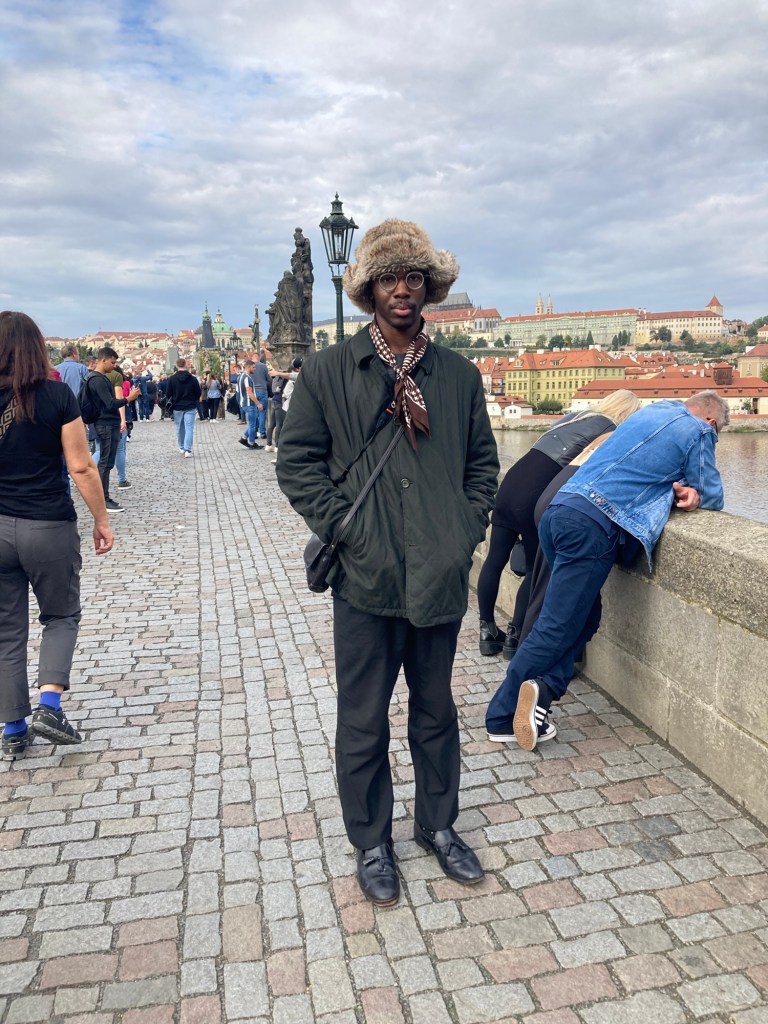
The nature during this time of year was excellent. I wasn’t used to seeing colours like this.
I managed to get some really beautiful photos on the bridge.

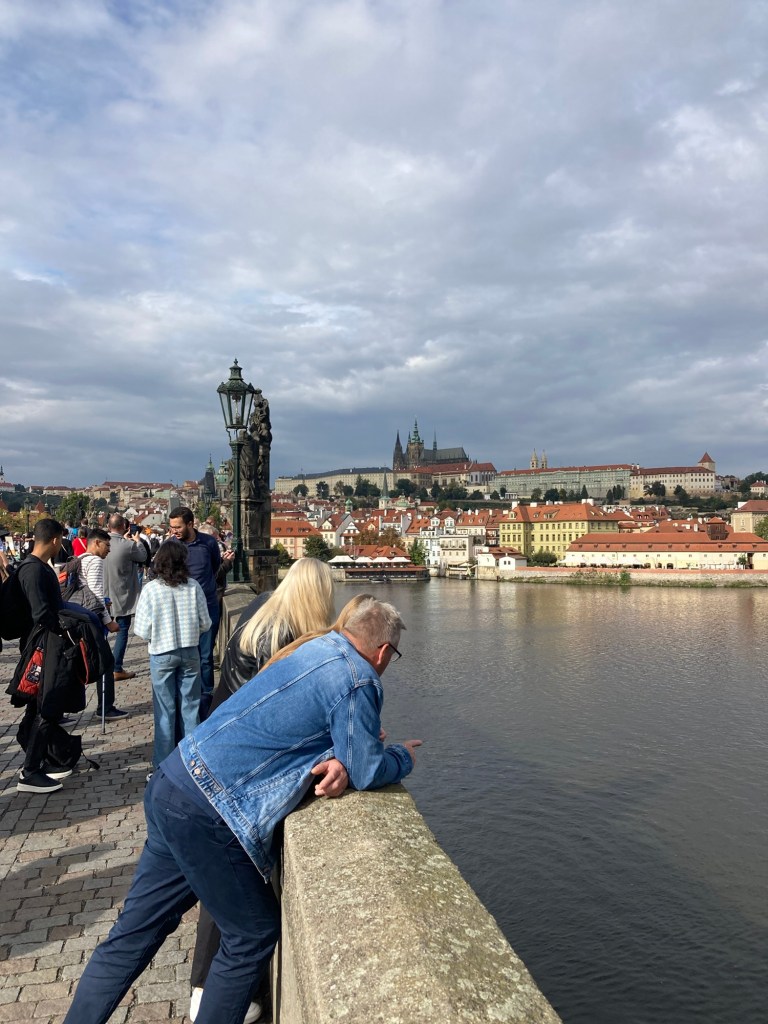
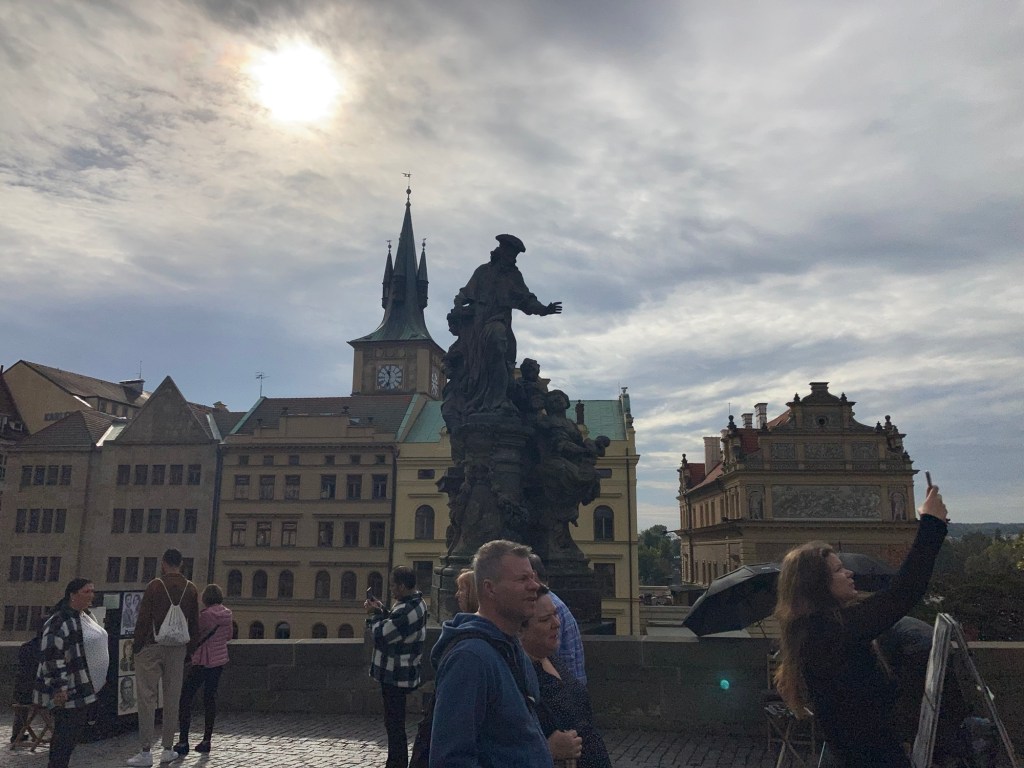
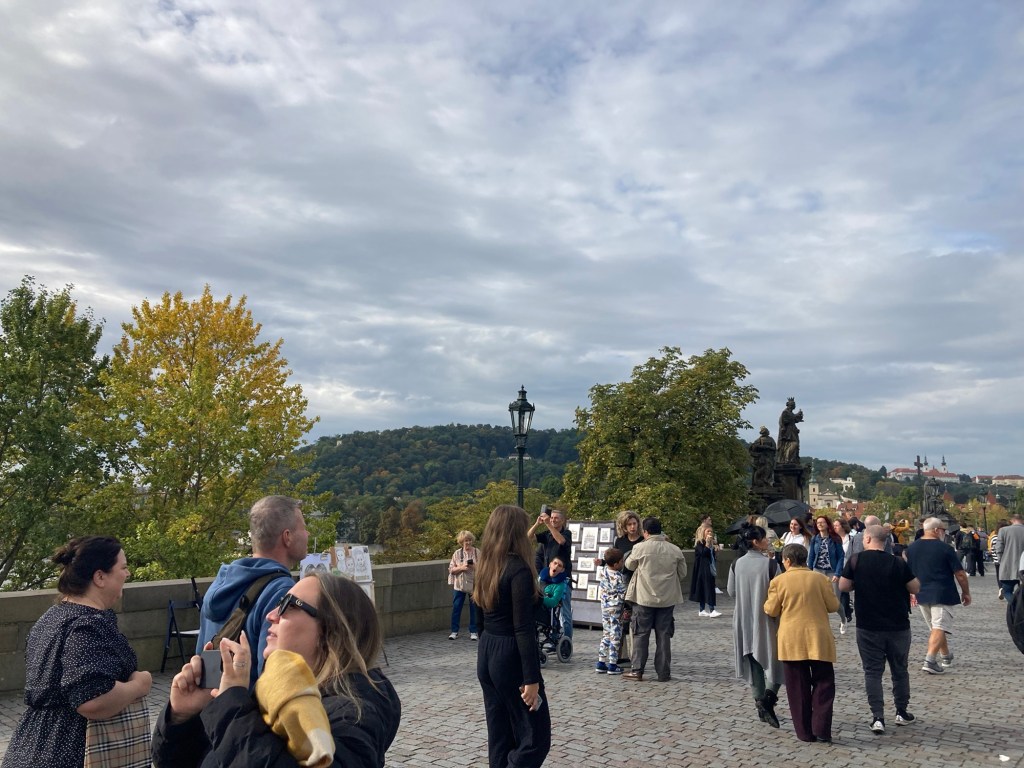
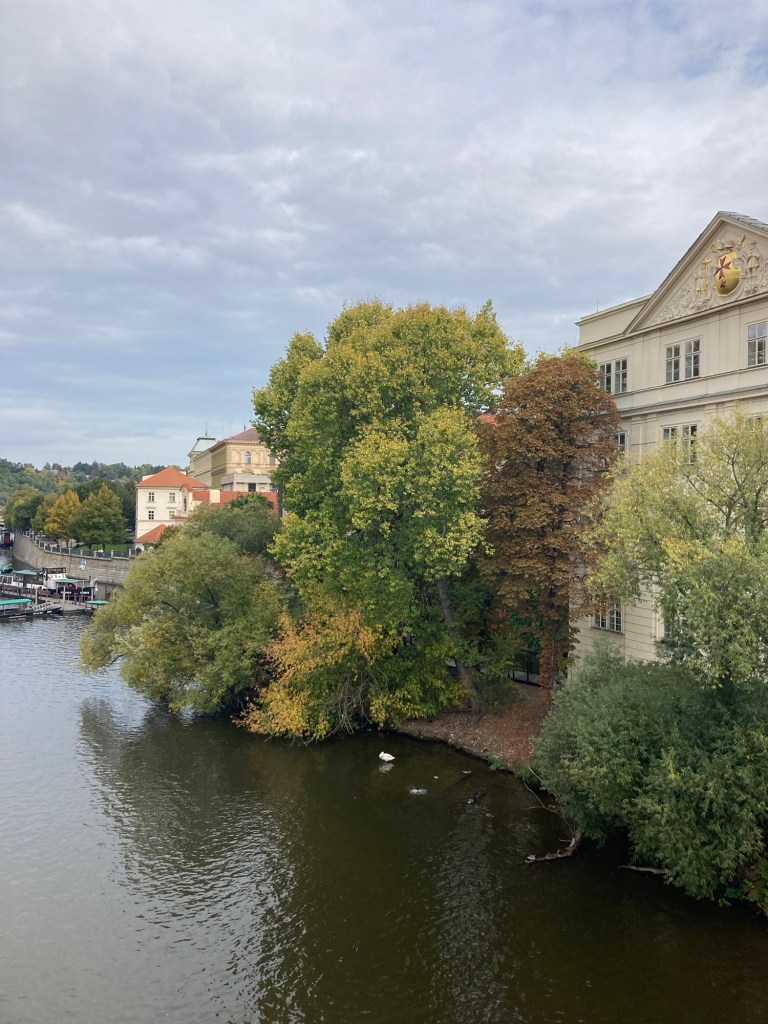
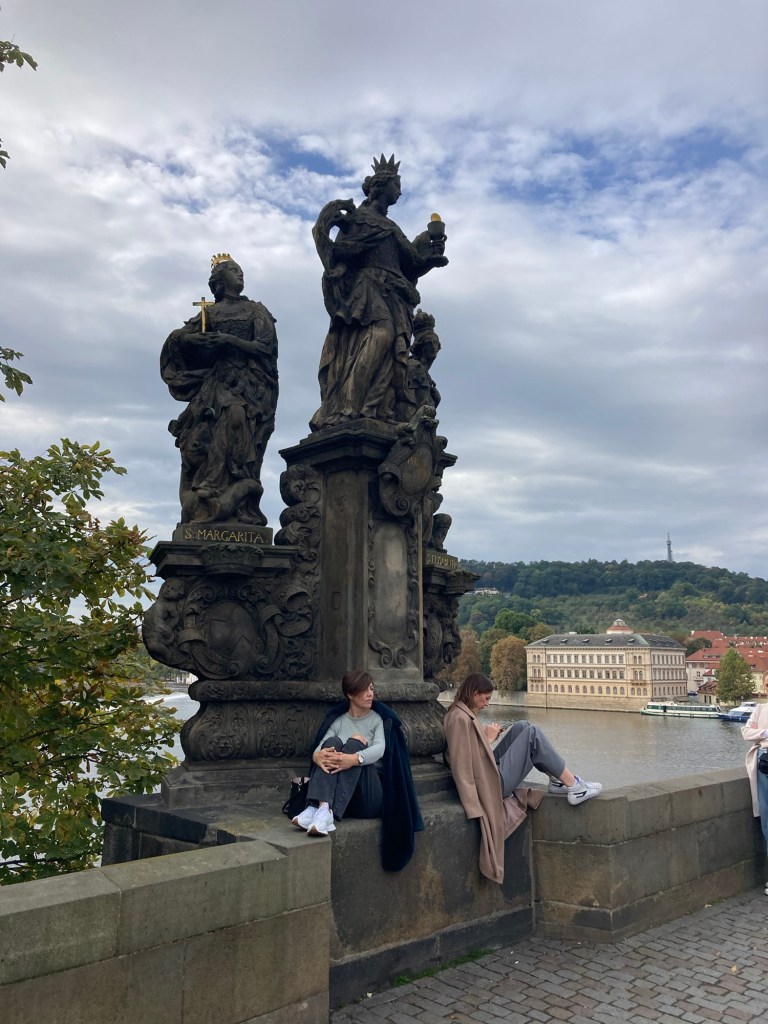
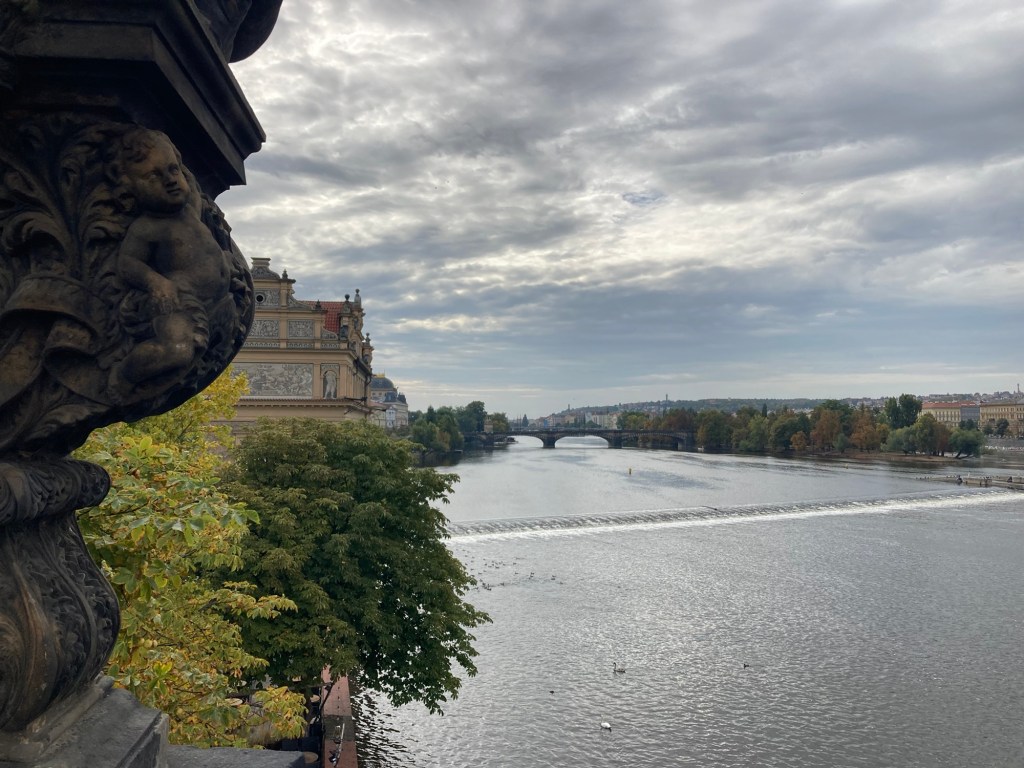
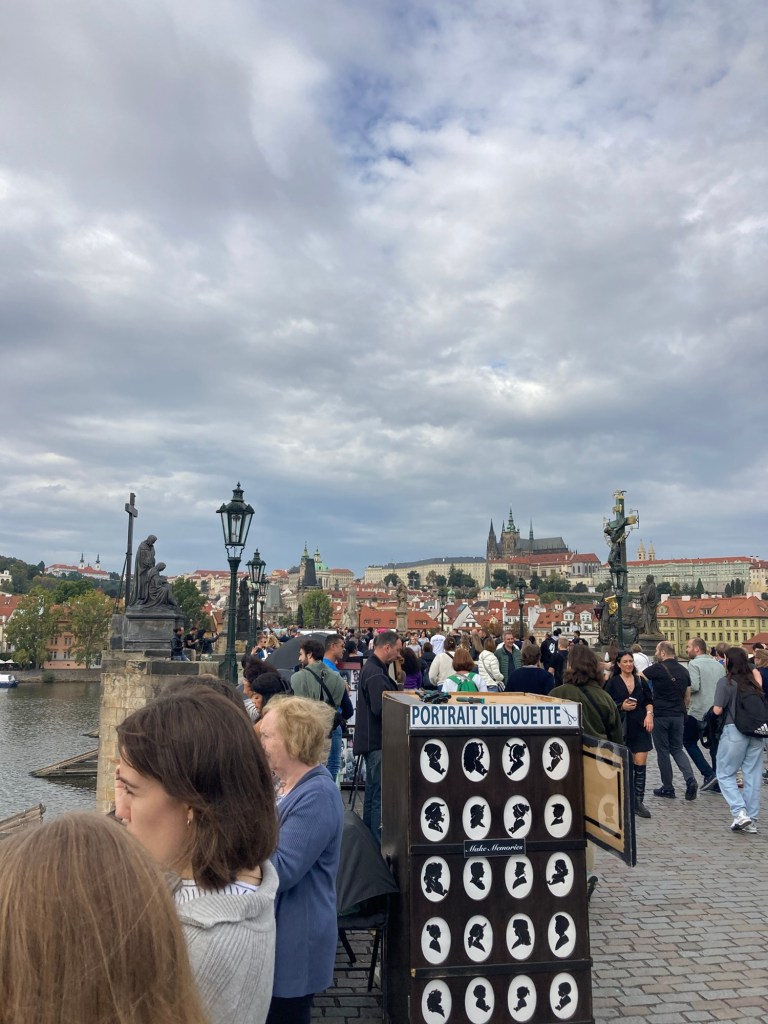
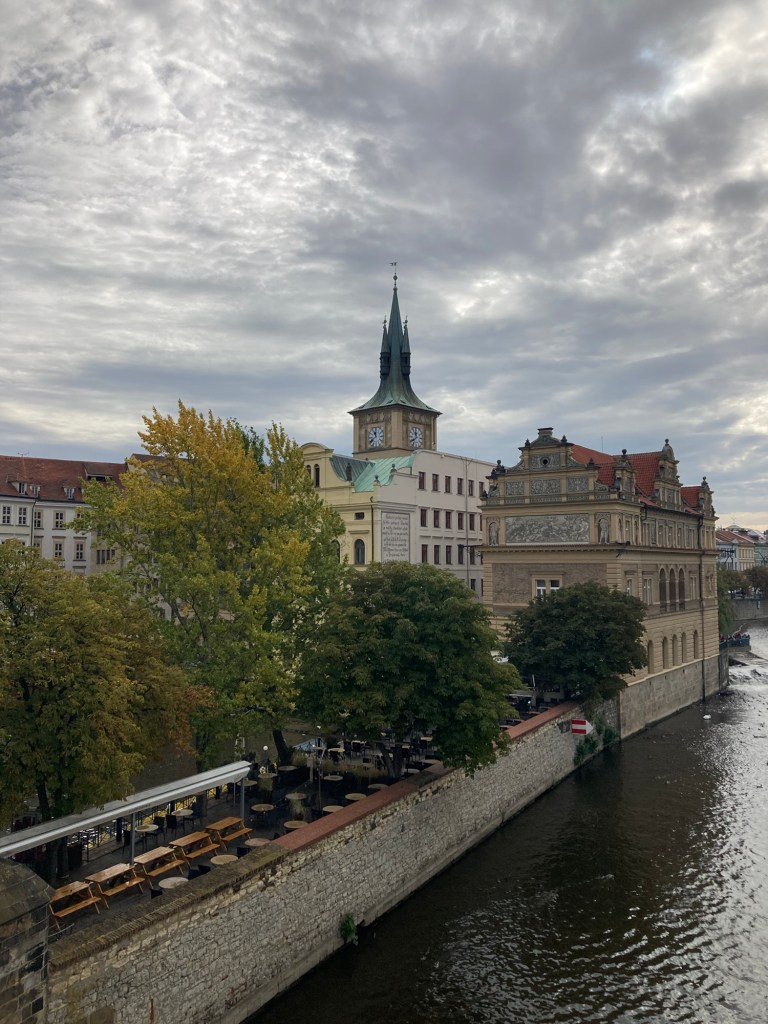
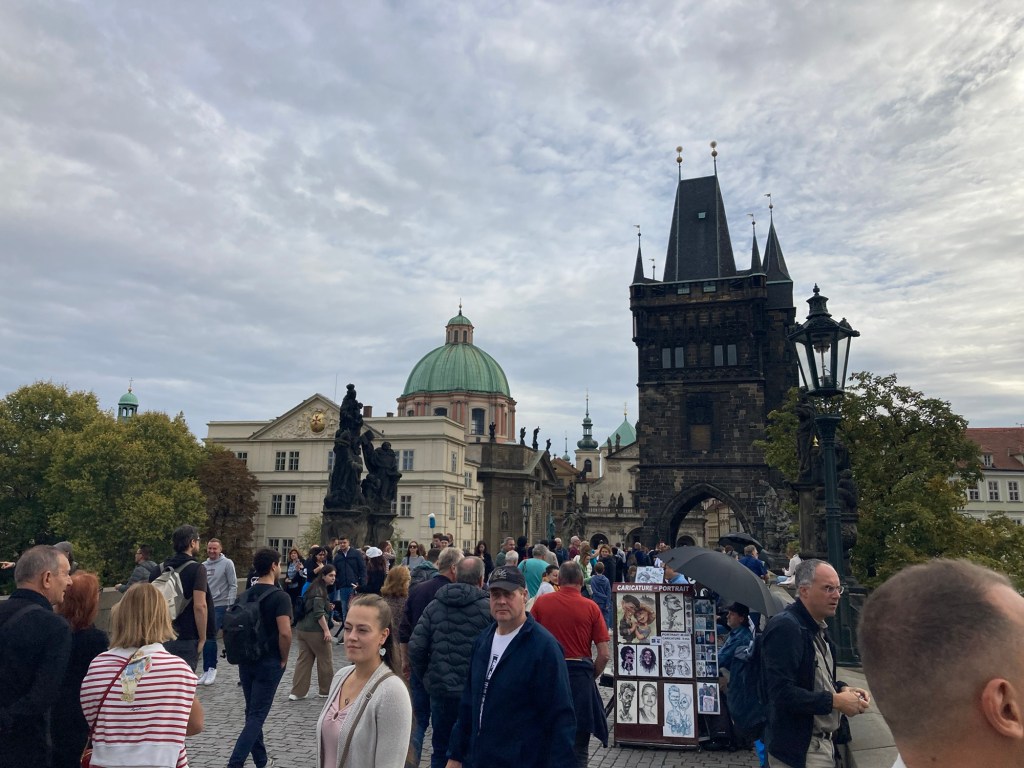
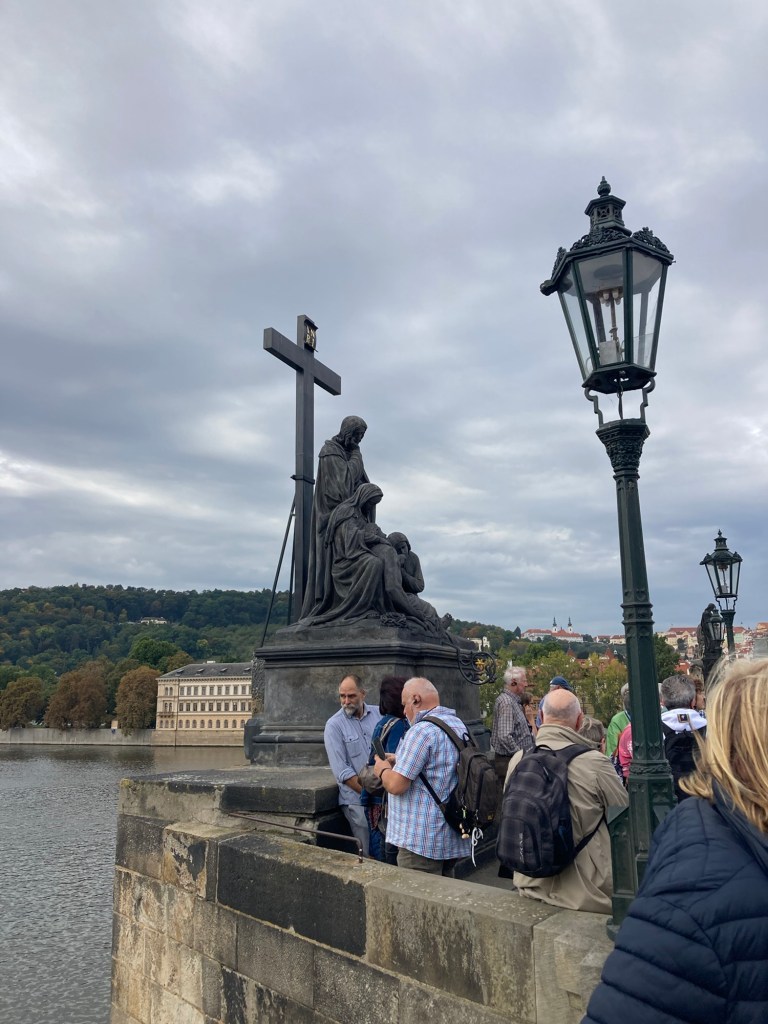
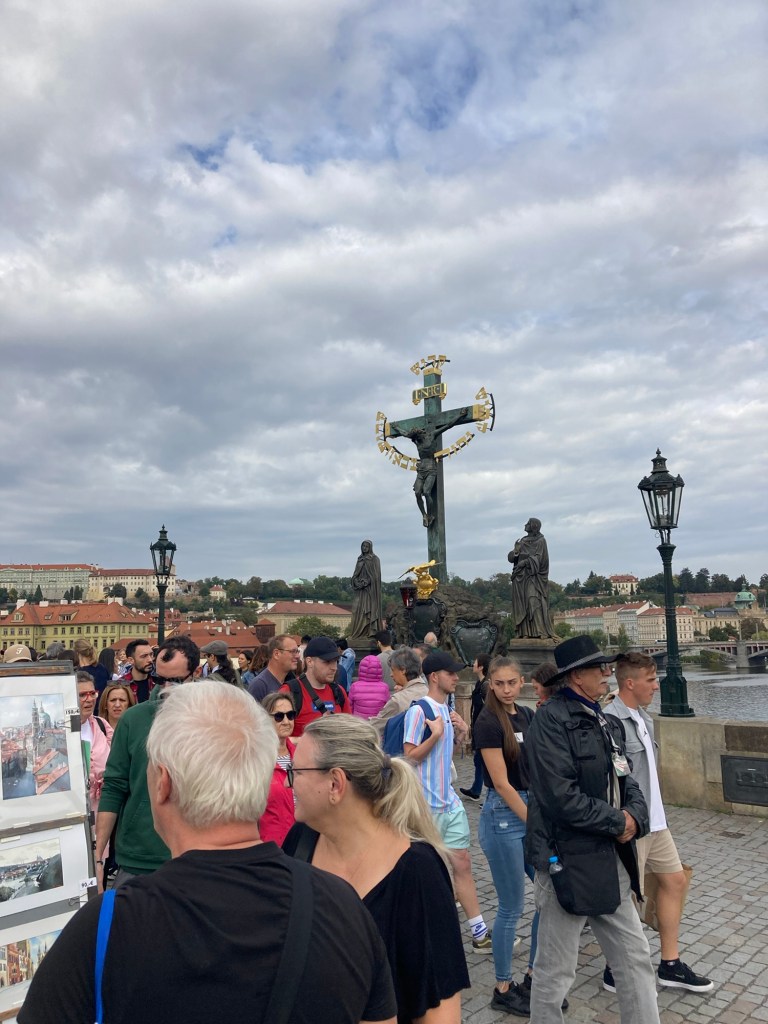
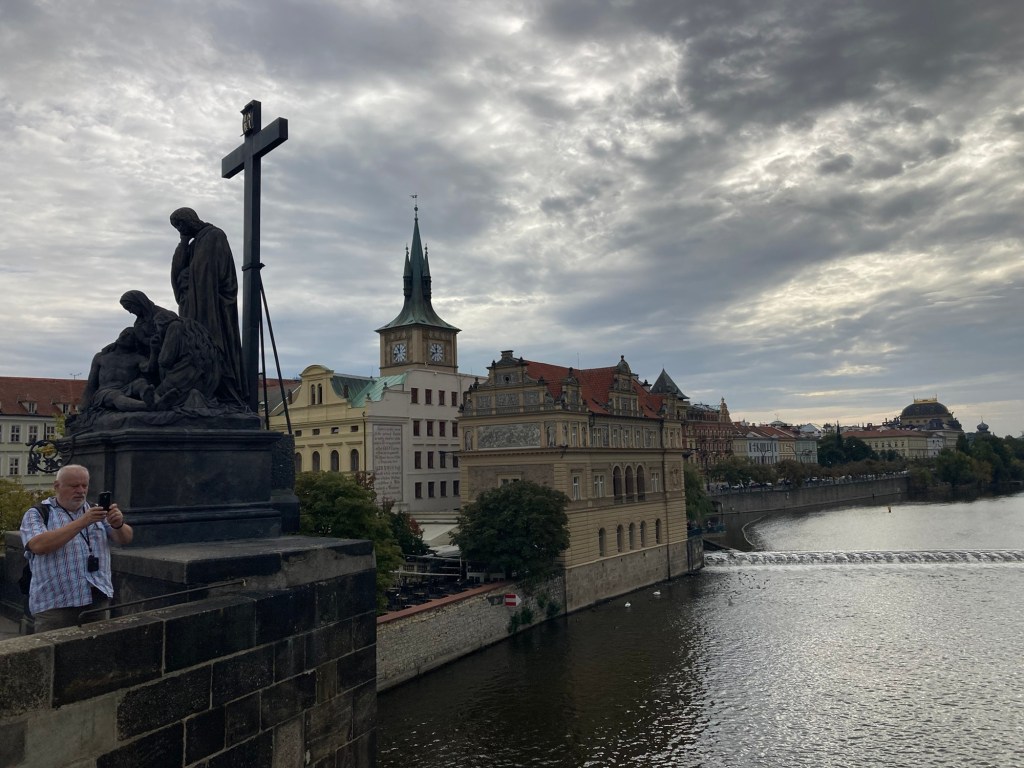
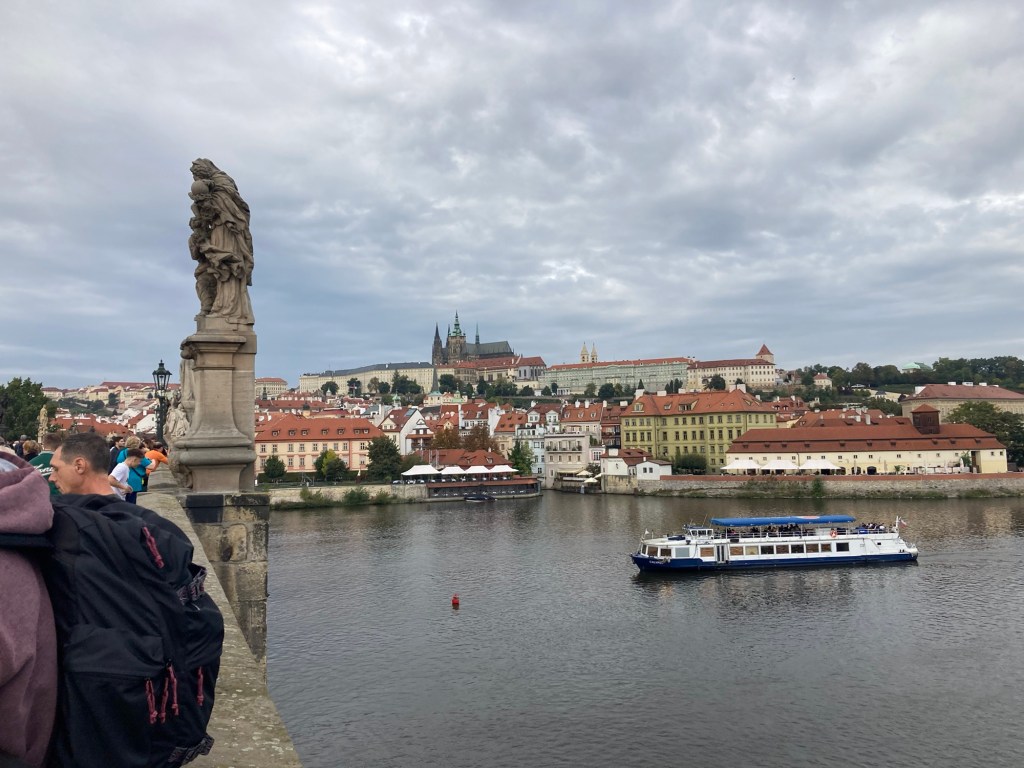
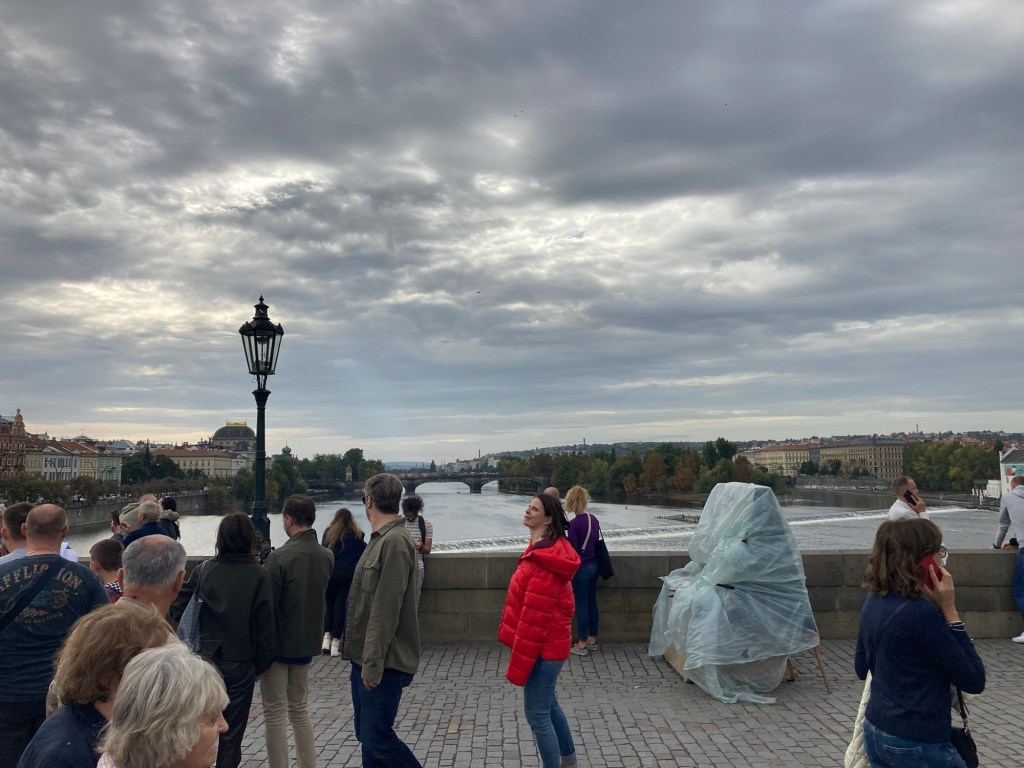
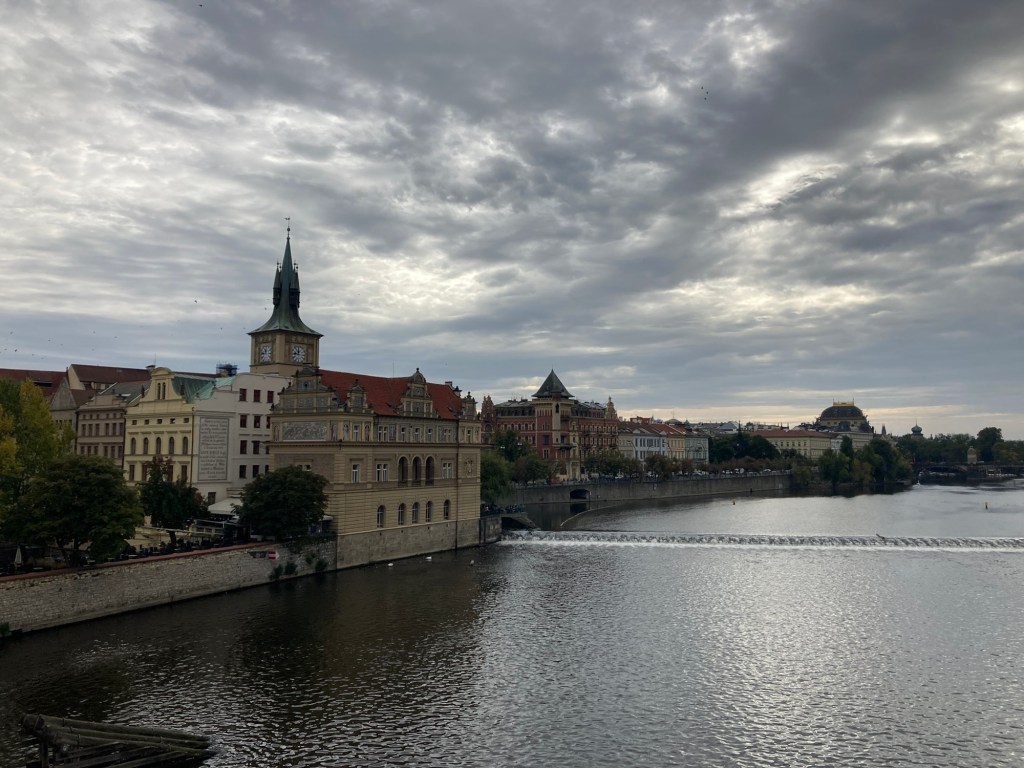
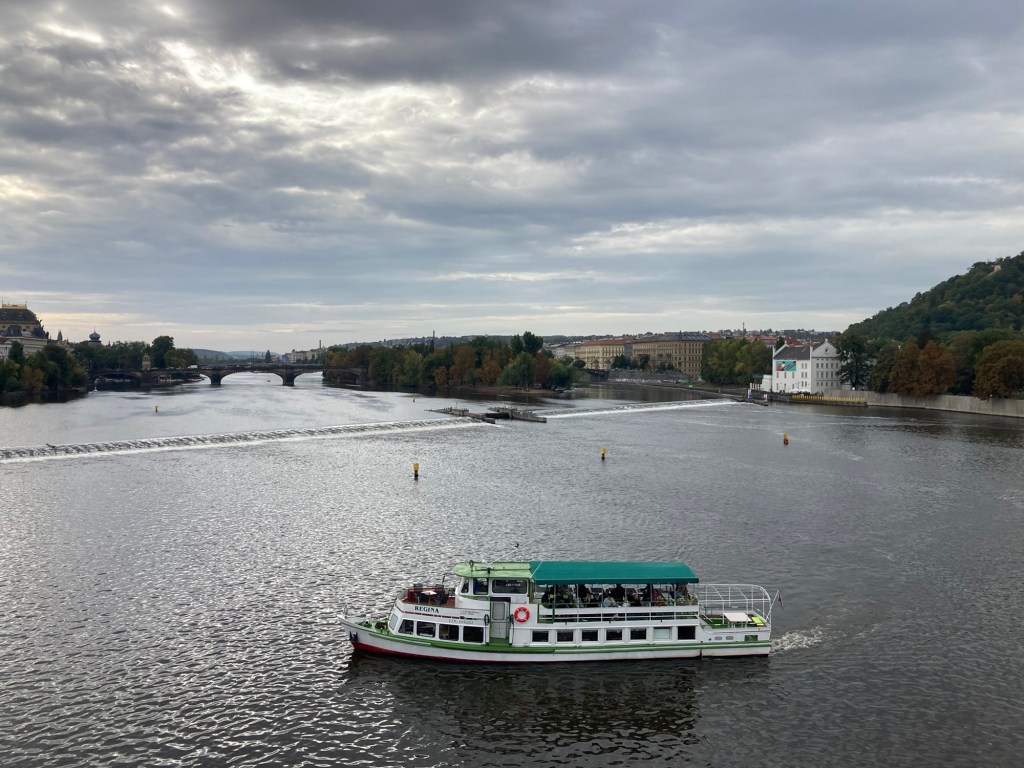
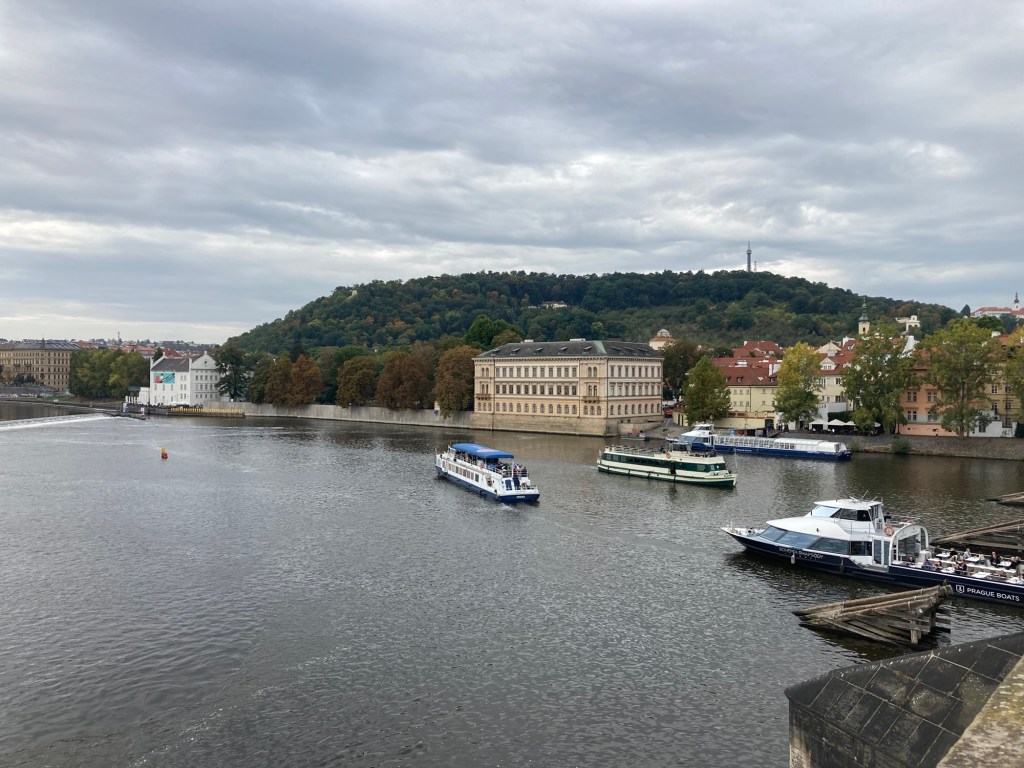
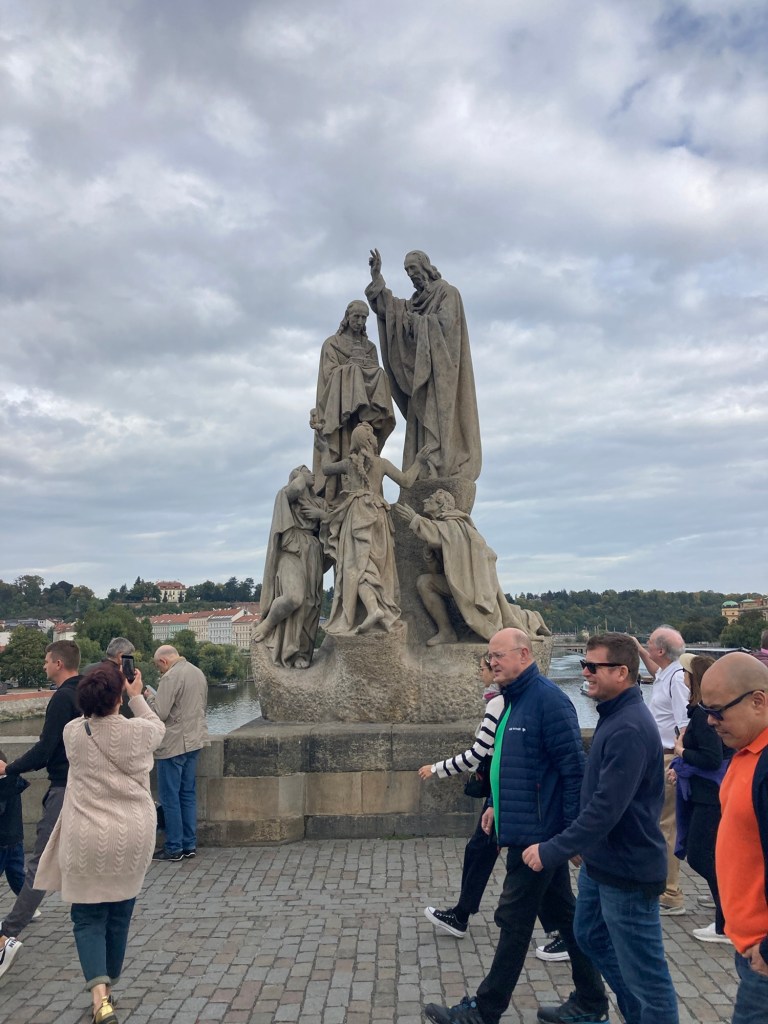
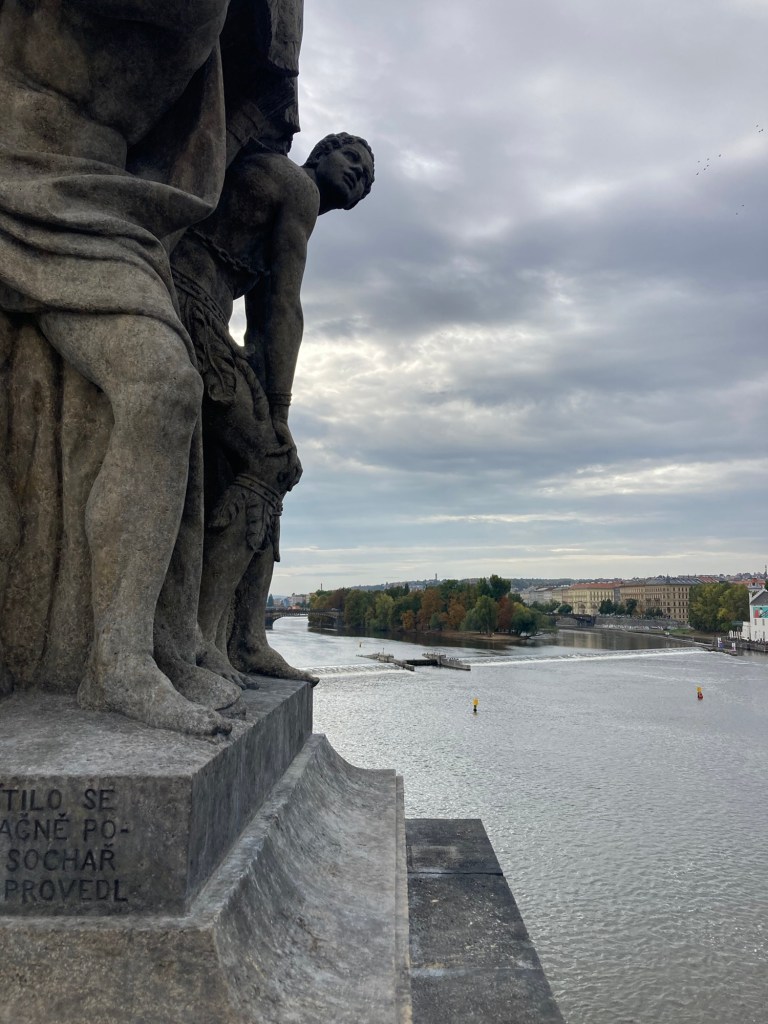
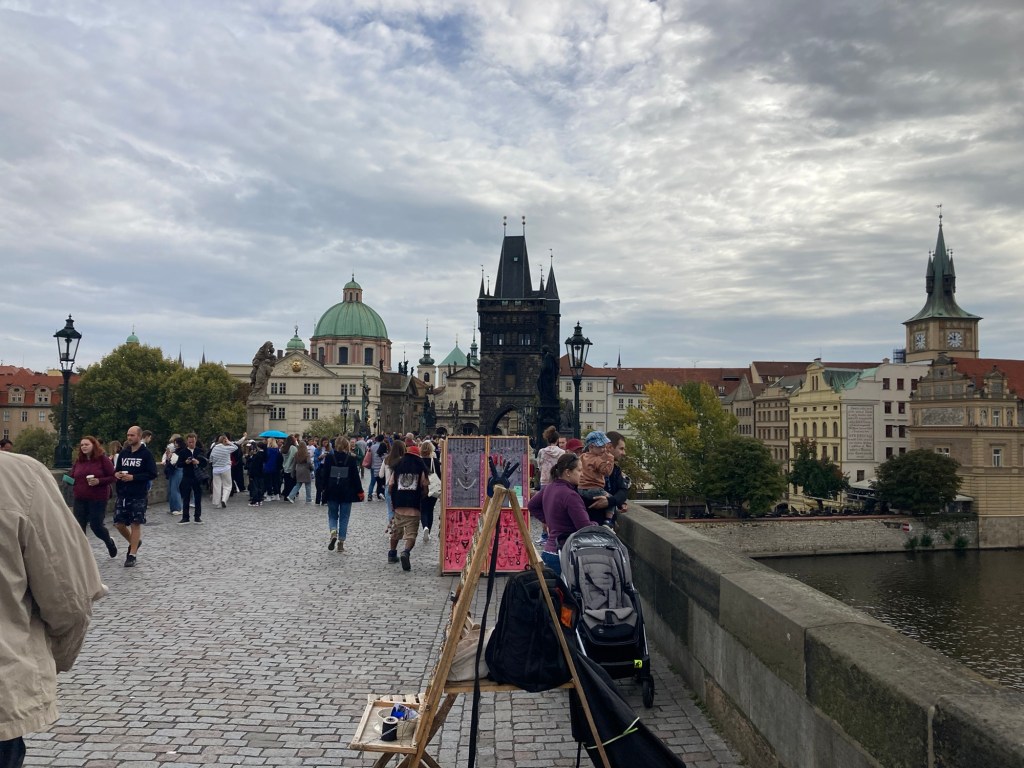
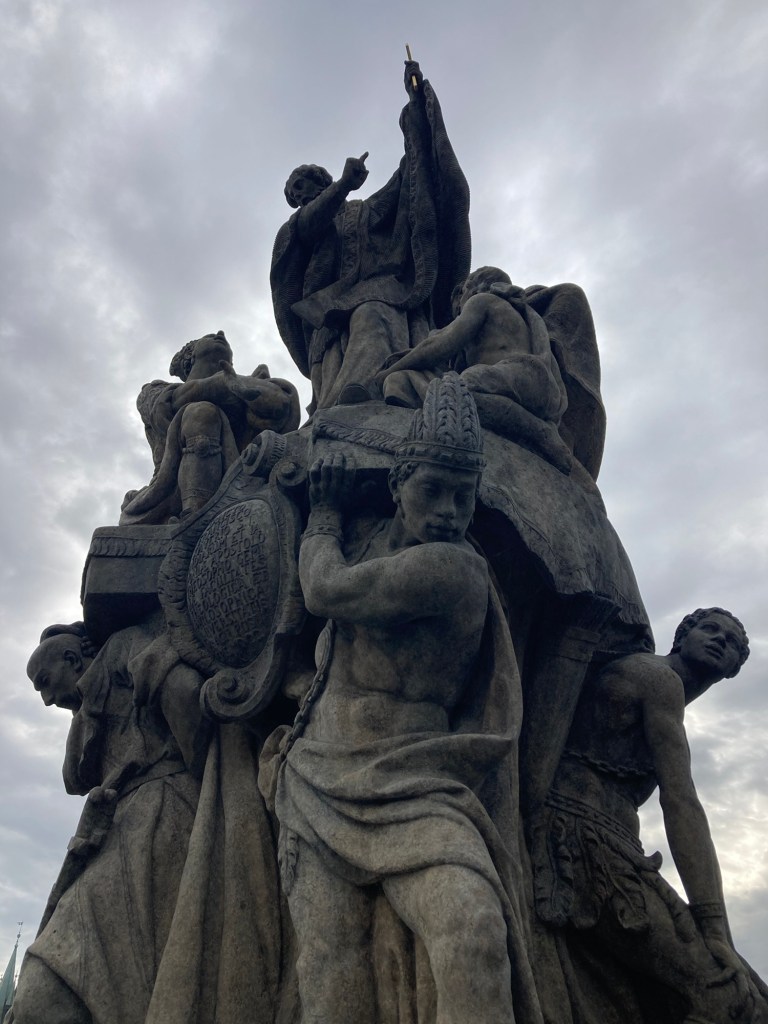

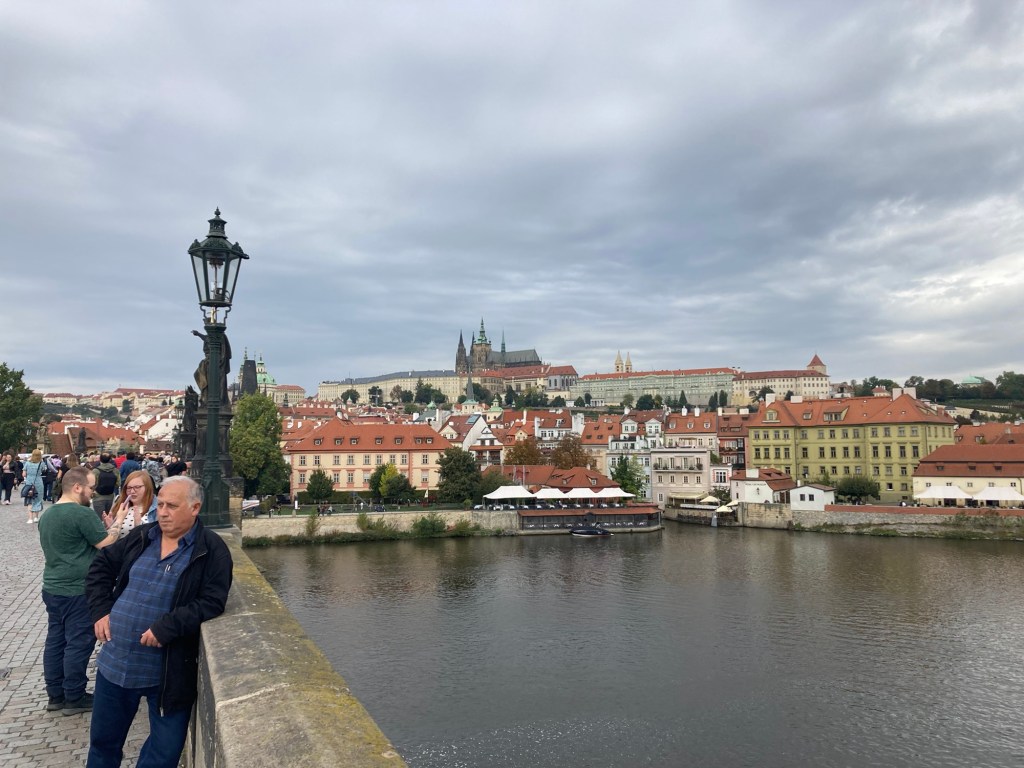
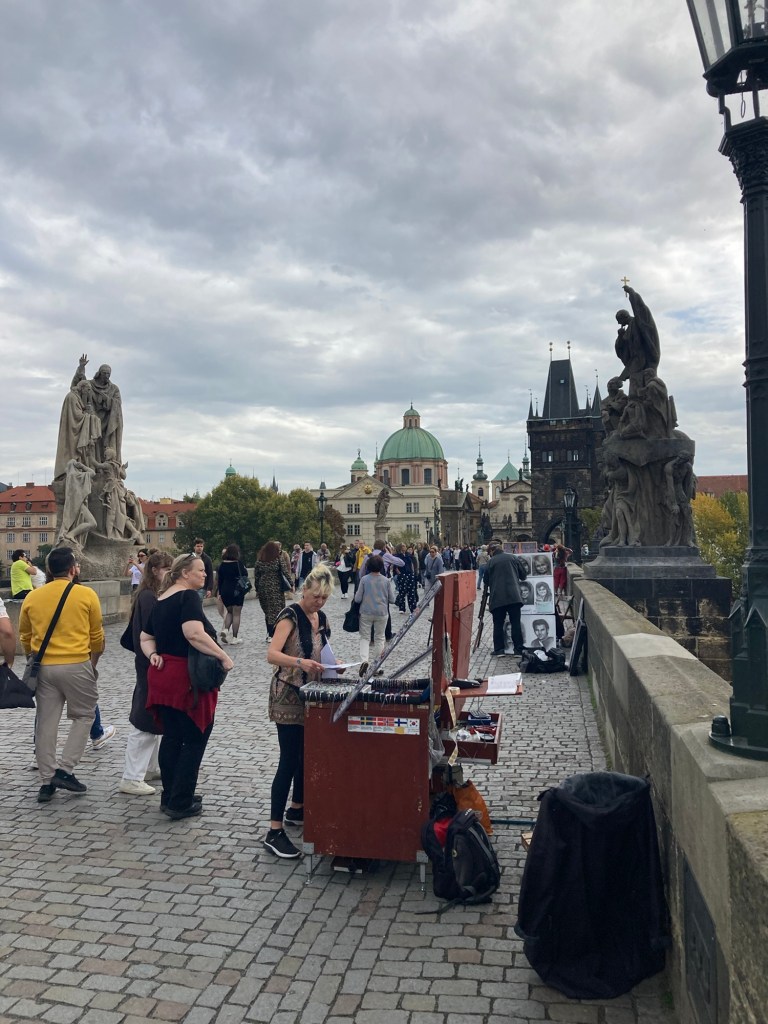
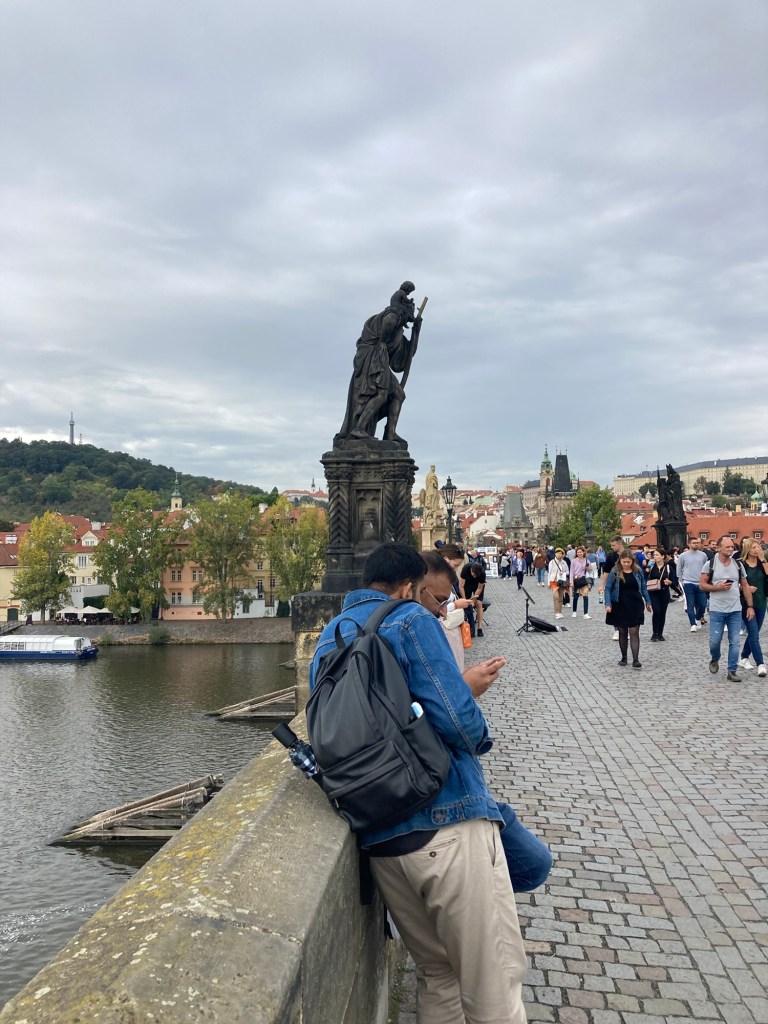

At 12:00, it was 20°C (68°F). I eventually reached the spot where St. John was shoved forcefully off the bridge, and supposedly martyred. There is a plaque in its place.

When I eventually made it to the other side of the bridge, things were a lot more peaceful. There were flowers hanging from windows attached and colourful homes. Or at least what appeared to be houses or apartment buildings. It seemed like something special, possibly high real estate.
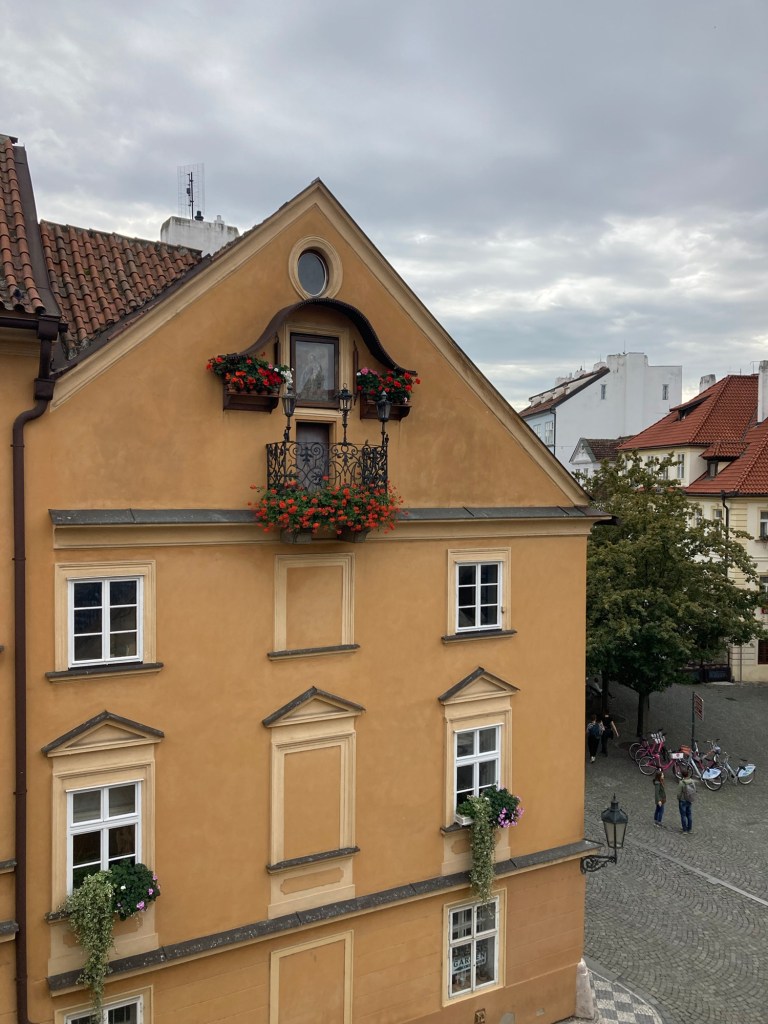
There was still a continuation of statues. By 12:18, I passed to the other side of the bridge, underneath the gate. There was a clear pathway to a church, which I walked towards. I was now in Malá Strana (lesser town or lesser Prague).
(Note: I have more photos from near the end of the bridge and parts of Malá Strana, put will possibly update this post at a future time to include them, or create something extra)
This was Saint Nicholas Church (Kostel svatého mikuláše) in Prague. The top was also very tall.
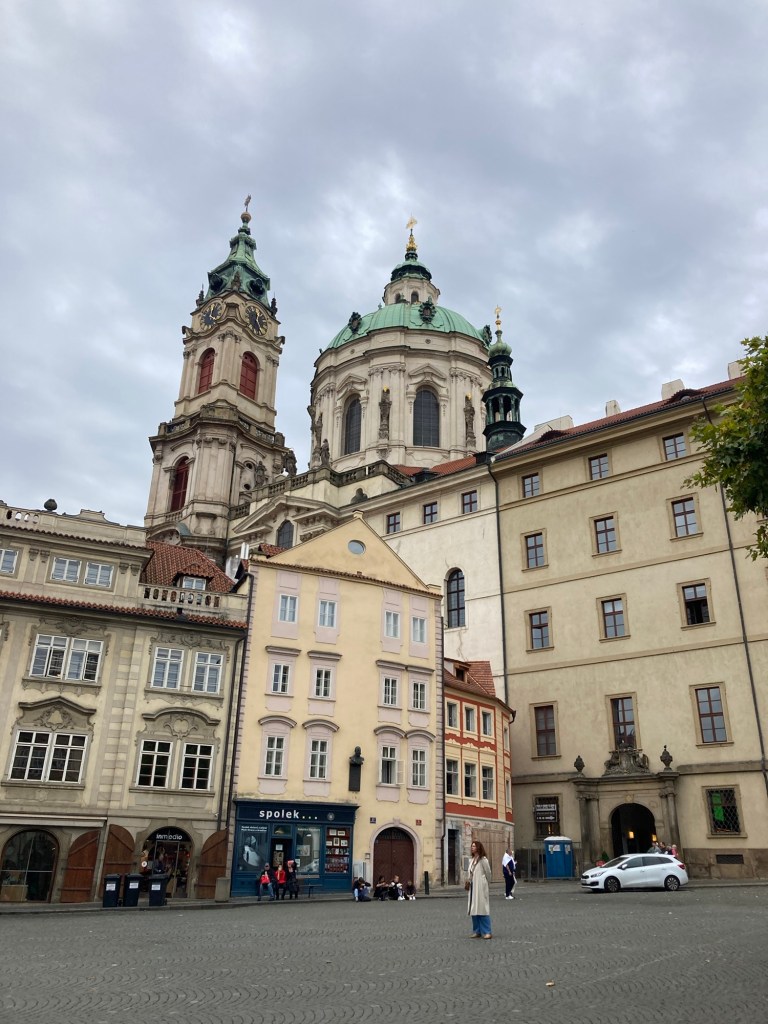
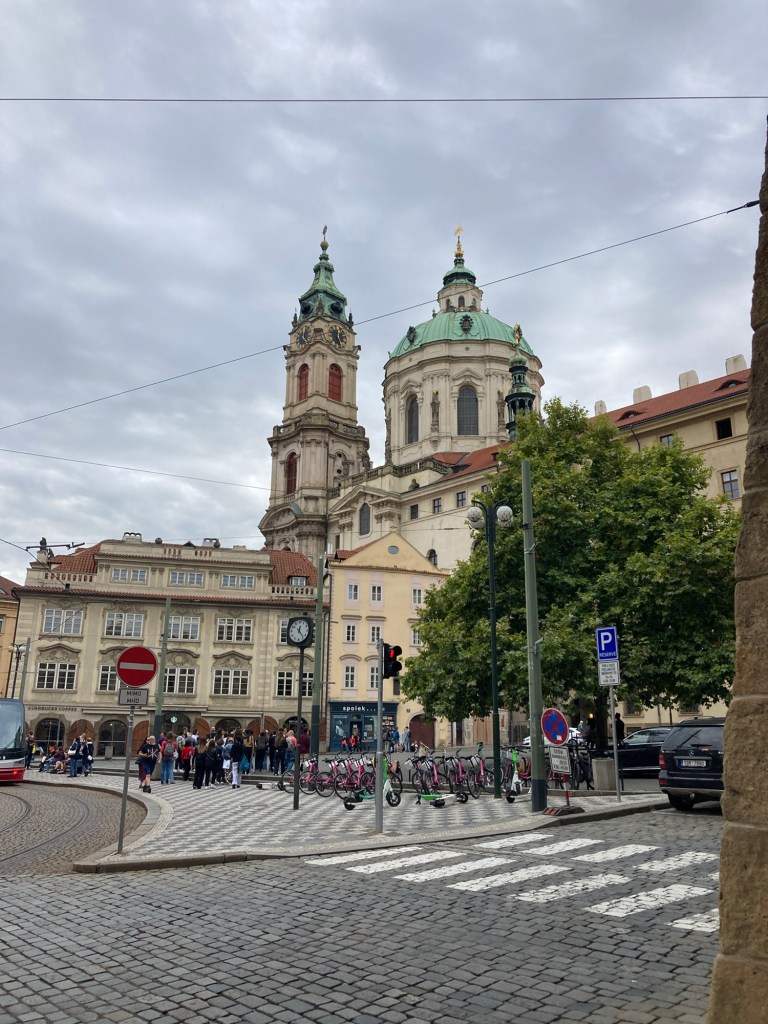
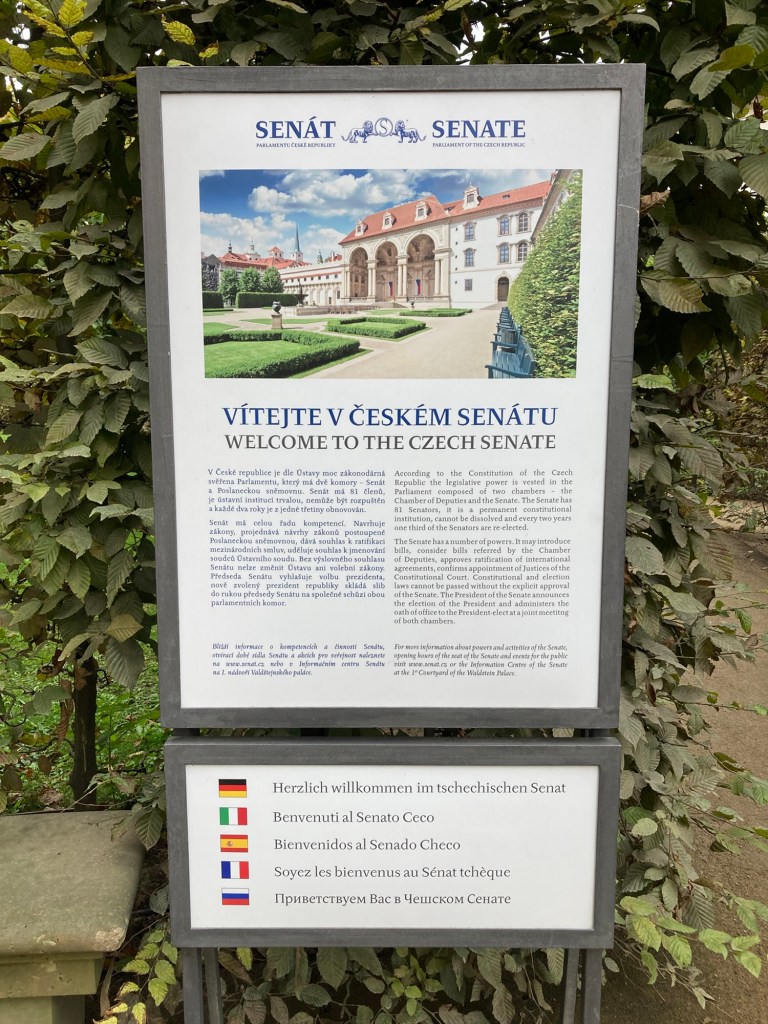
Not knowing this side of town had to offer, one right turn did end up leading me to the Czech Senate. This was at 12:30.
The senate is located on the Wallenstein Palace (Valdštejnský palác) complex, commissioned by a prominent military leader during the Thirty Years’ War. On the grounds, there was some kind of big white bird, resembling a peafowl (I am not a bird expert).
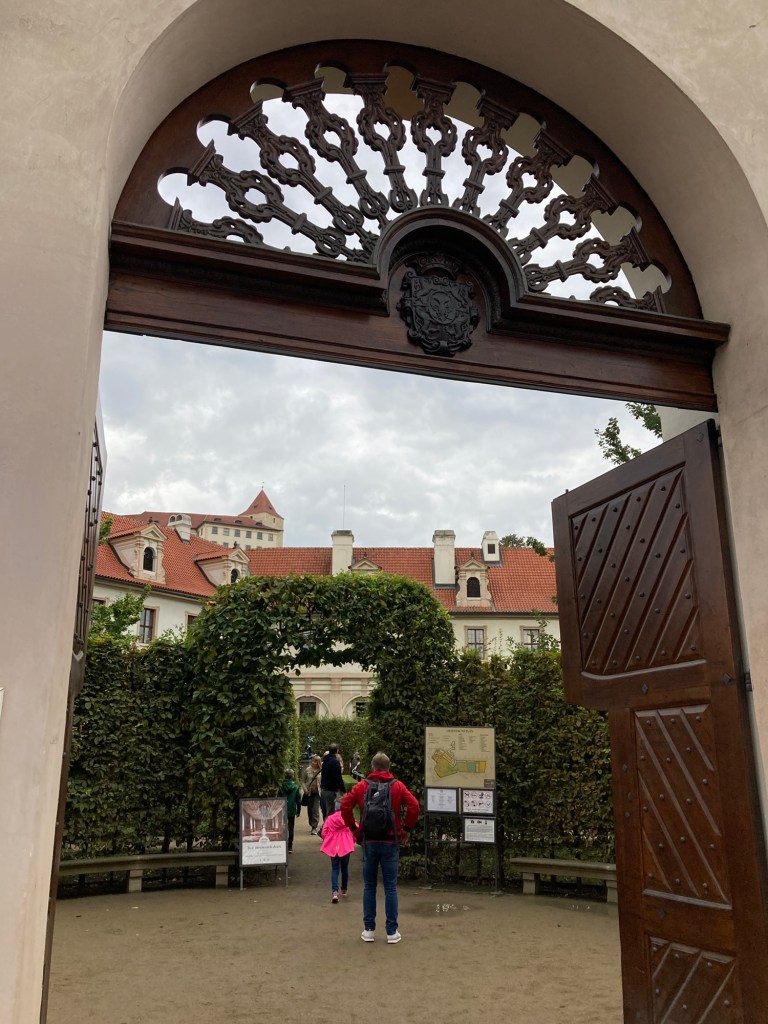
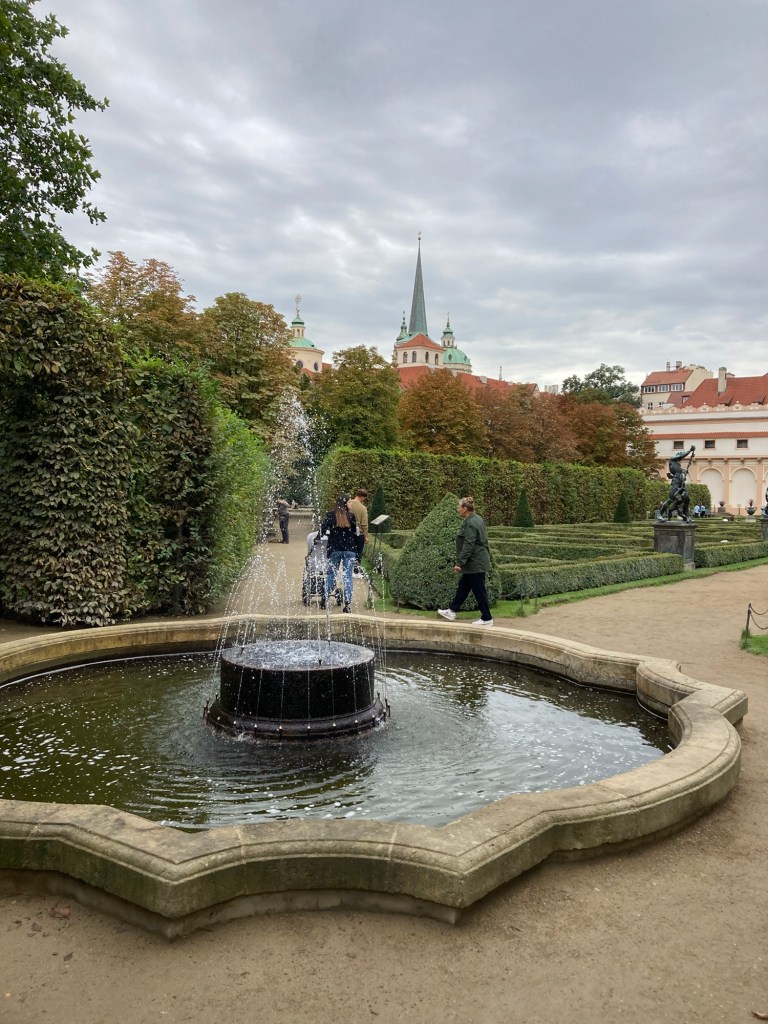
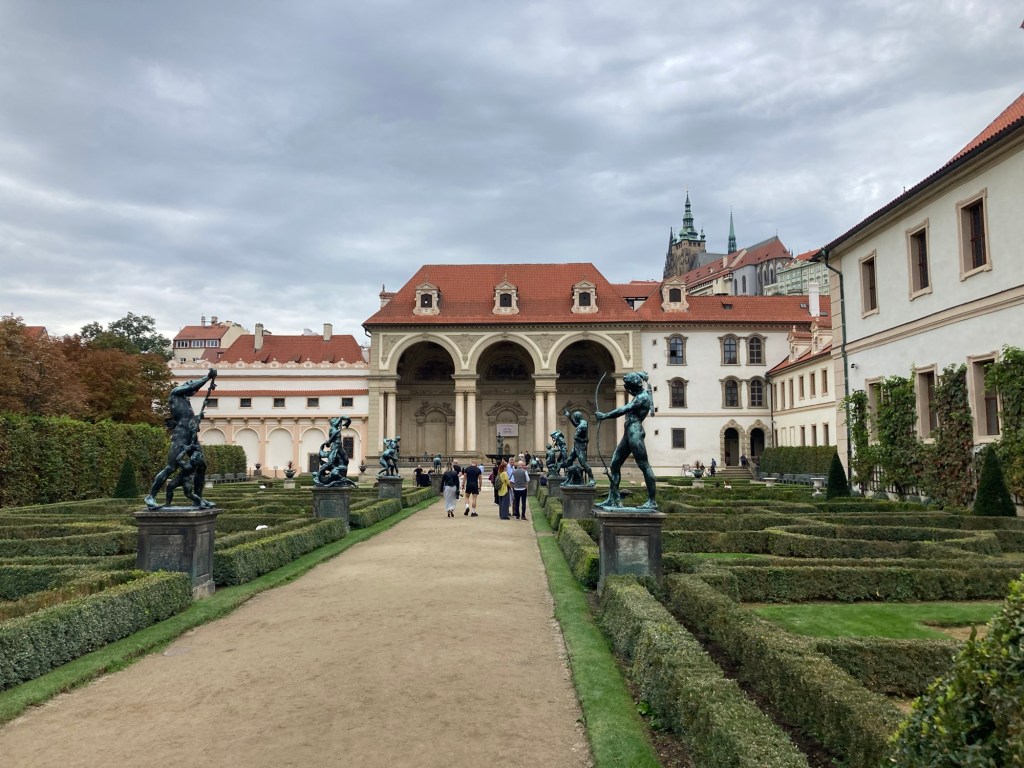

There was a big grand building with large arches, like giant Bolognese porticoes. I sat for a bit.
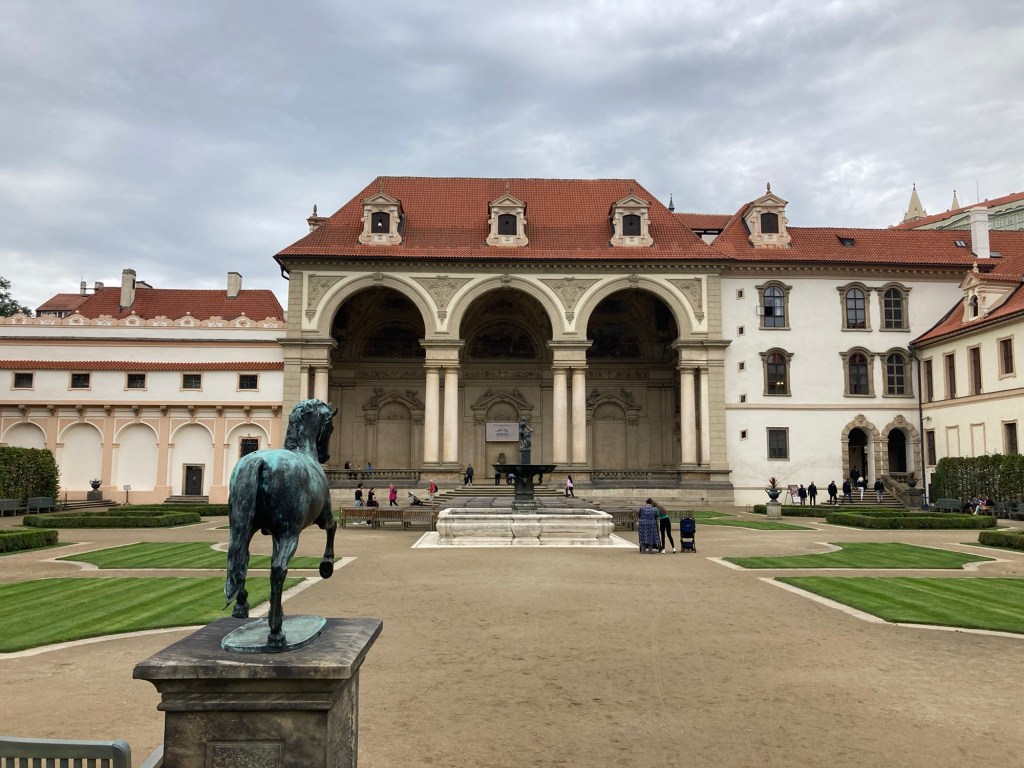
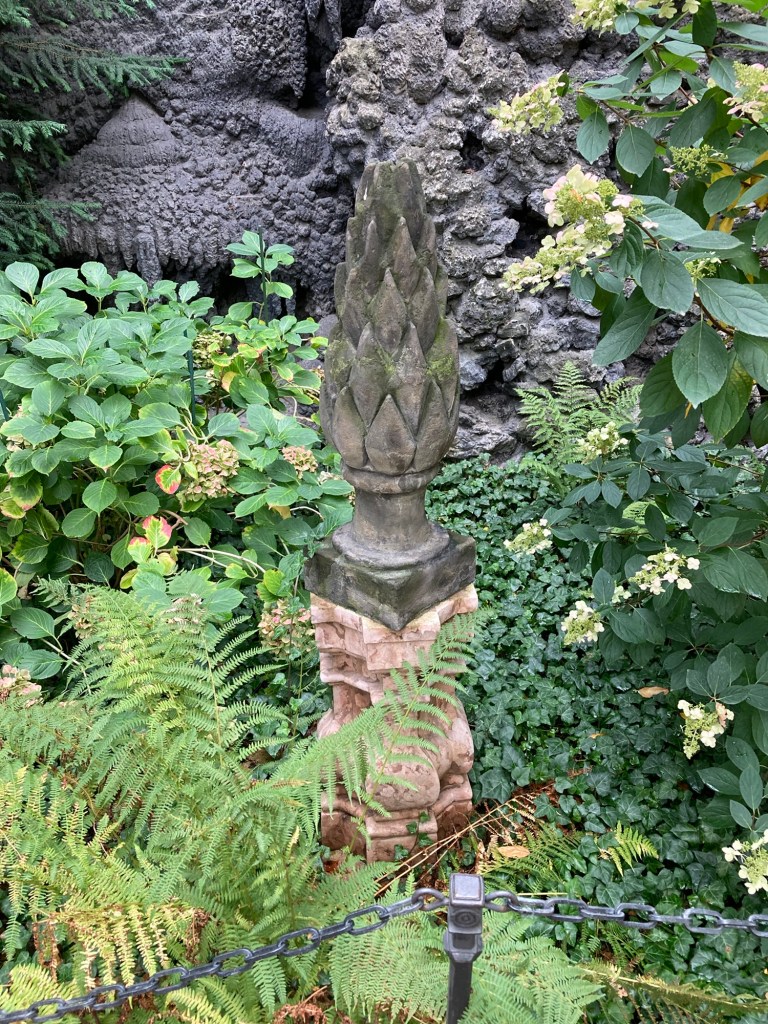
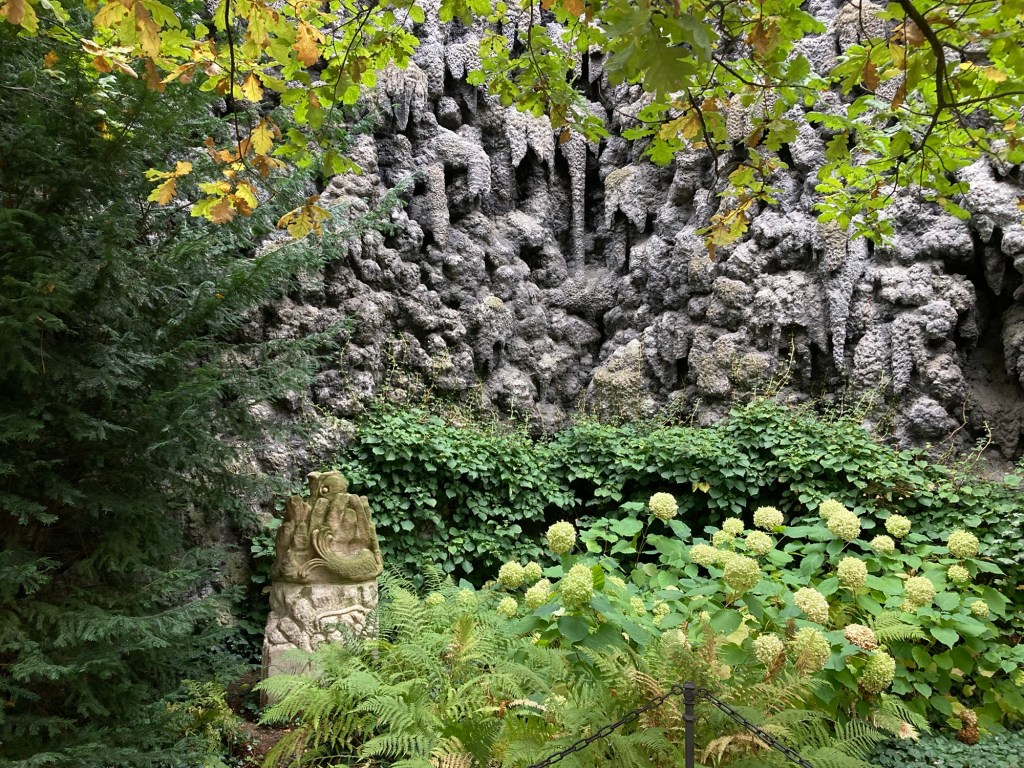
About 40 minutes later, I got up and I walked to a thing called Dripstone Wall (Hrádek). This was great. There are a few faces featured in the wall as well, carved. There was a plaque about it that you can read here.
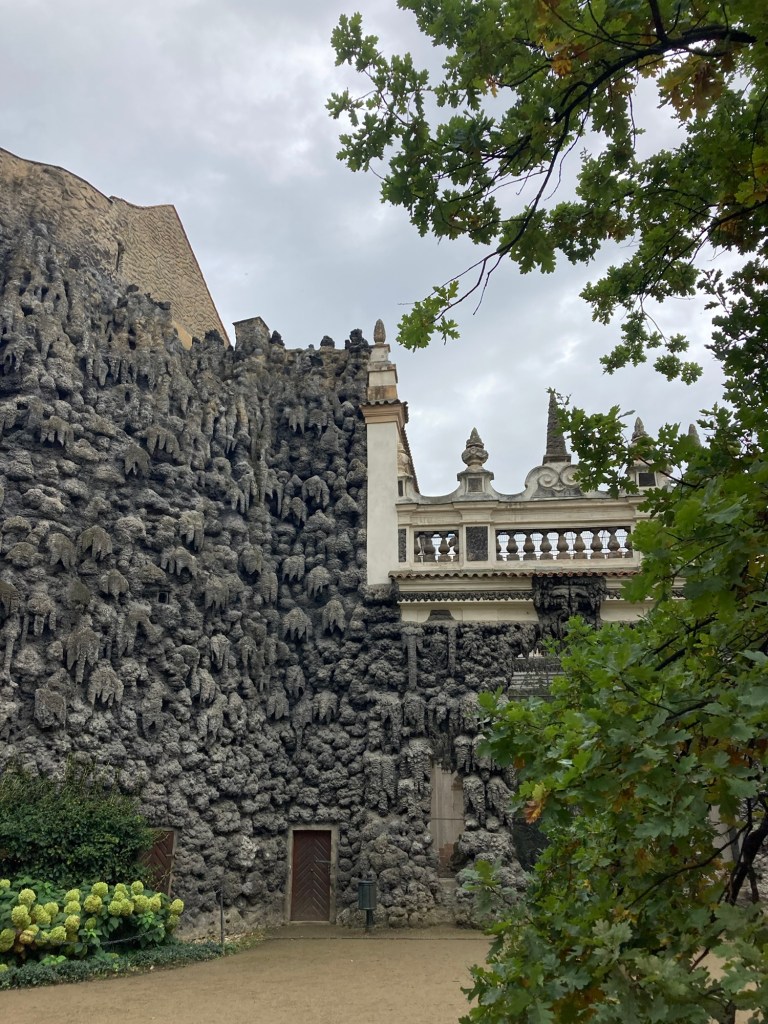

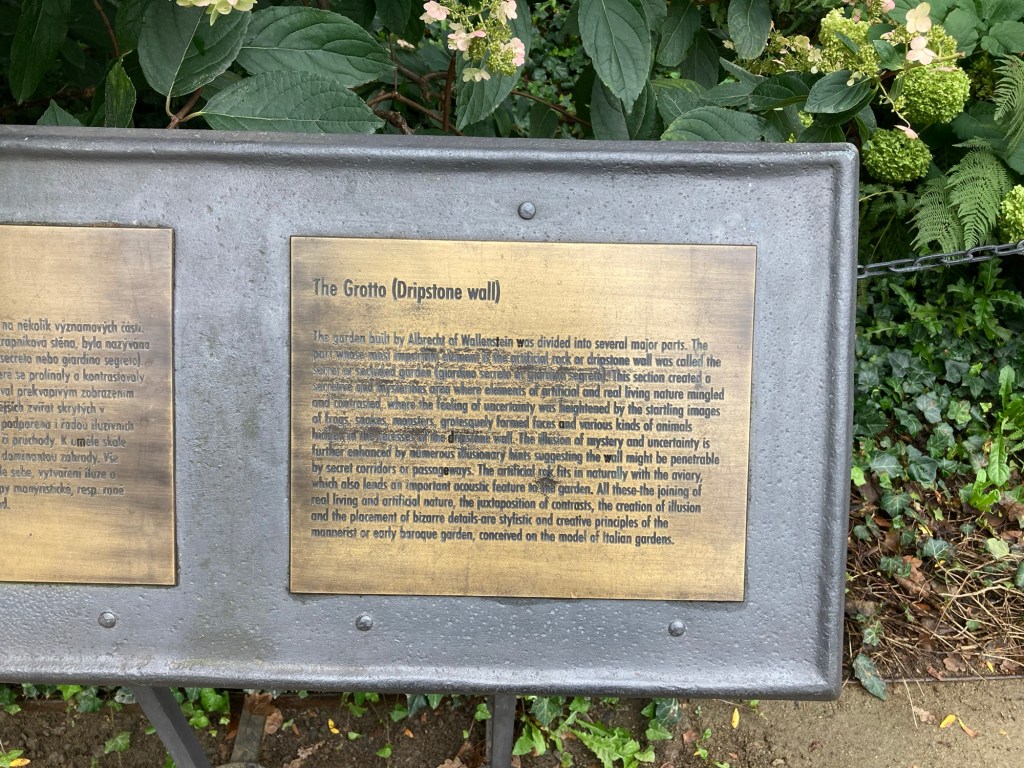
The wall was part of the mediaeval fortifications of Prague and is associated with the Old Town’s defence system. The dripstones were designed to protect the wall from water damage. It was built in the 14th century under the reign of Charles IV; I guess it worked!
The garden featured other cool things, but I mainly came to the premises to see it and leave. I left at 13:28.
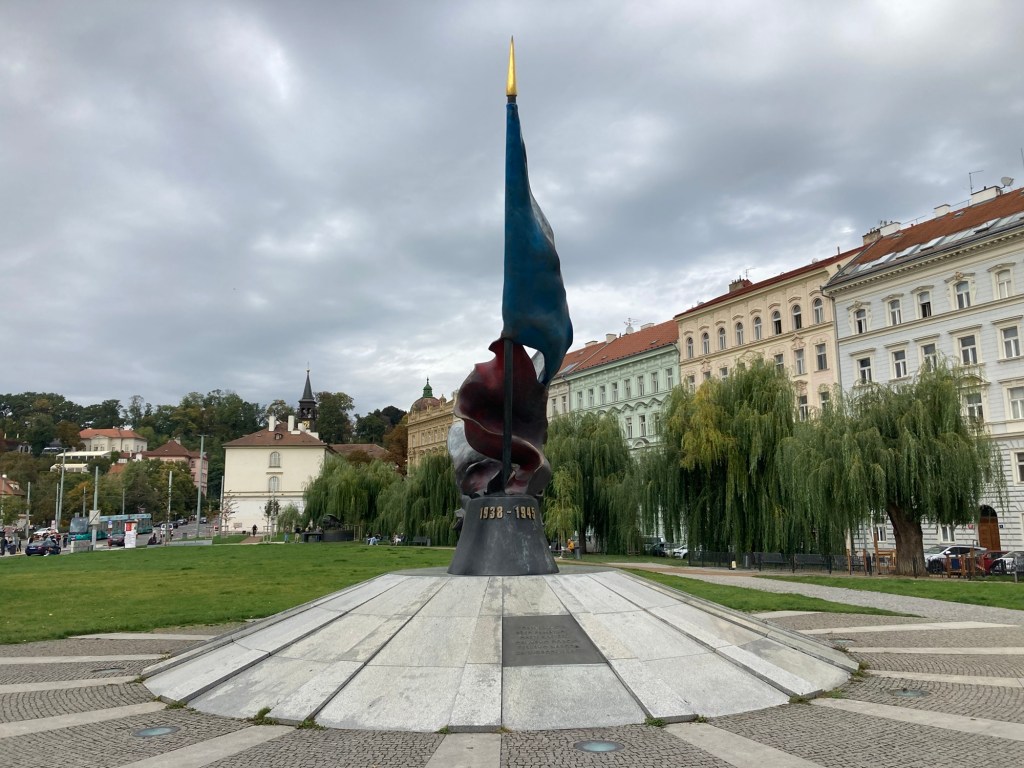
There was a monument titled “Památník obětí a vítězů druhého odboje”, in English, the Memorial of the Second Resistance Movement. It was erected in honour of the people who resisted against the occupation of NSDAP (Nazi) forces in Czechoslovakia. It commemorates the time period from 1938 to 1945.
From here, I marched into the Jewish part of Prague; the historic and authentic Jewish Quarter (Josefov). I did cross a bridge that’s adjacent to Charles Bridge, Manesuv Most, which offered a particularly excellent view of Charles bridge.
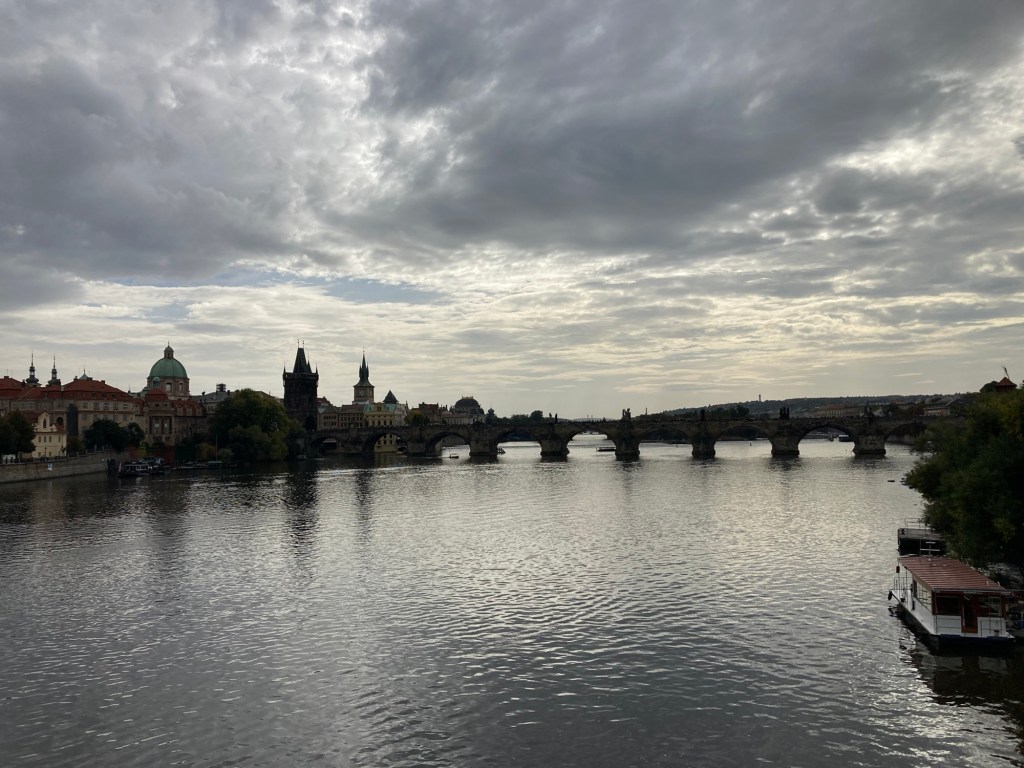
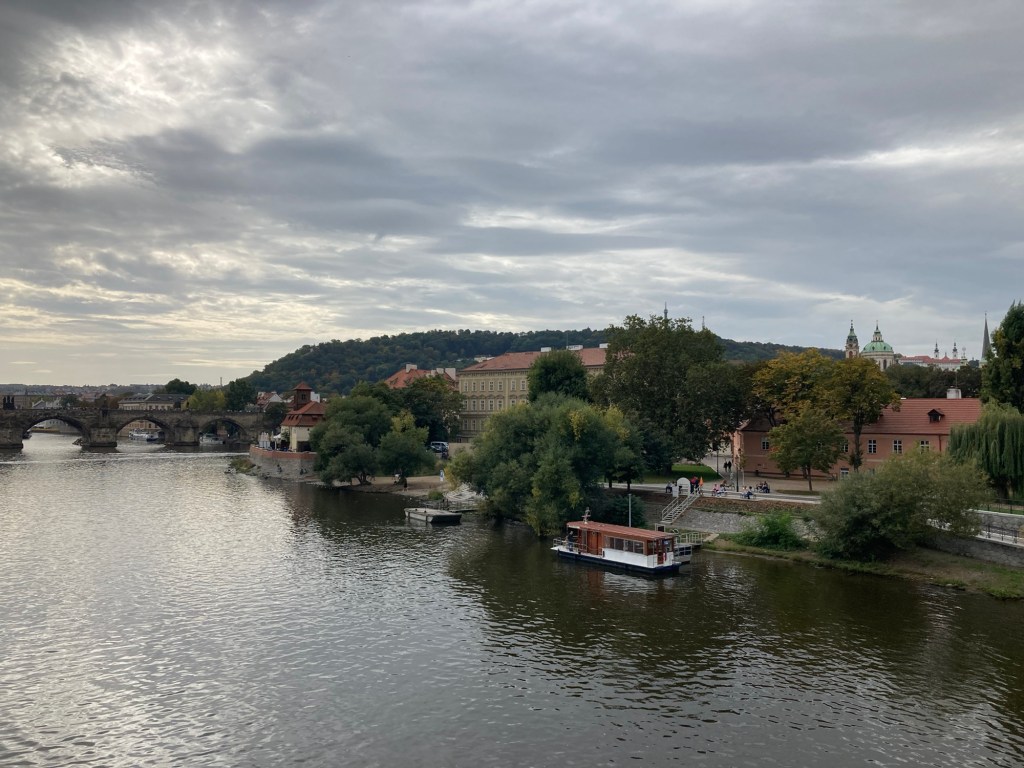
As I got to the other side of the river, I was greeted by an Israeli flag (this was inevitable given the geopolitical situations at the time of October 13th, 2023). This was at the Rudolfinum, home of the Czech Philharmonic Orchestra.
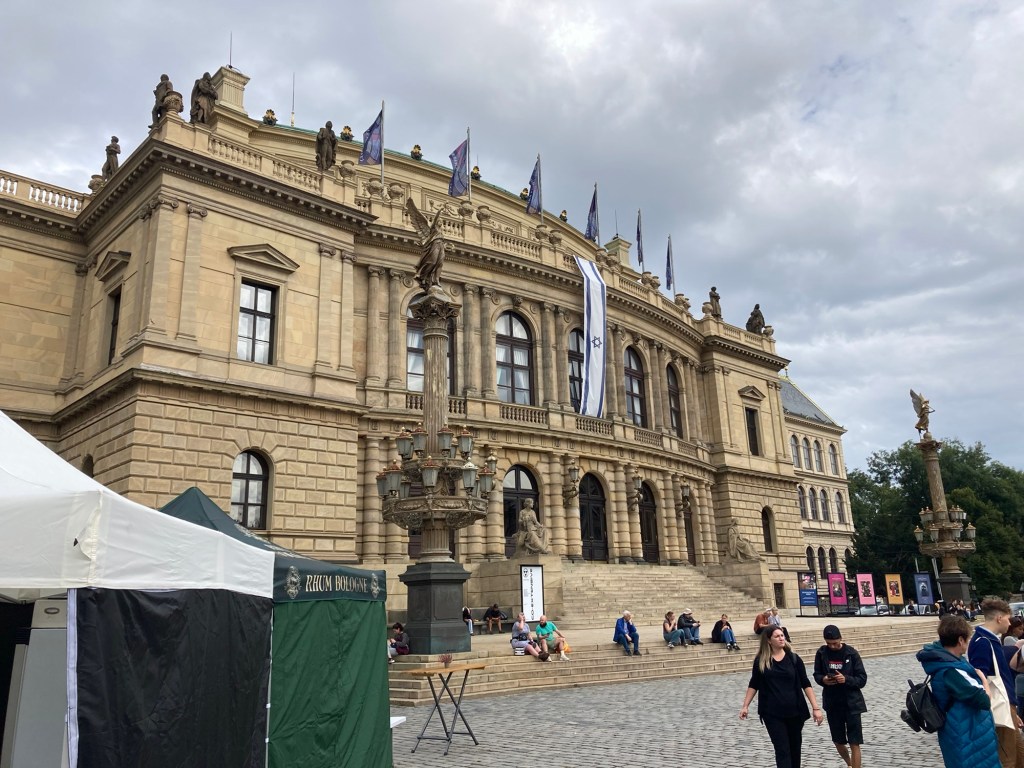
Placed nearby were large informative signs filled with stories about Czech defectors and dissidents and Scandinavian volunteers. These were stories from Cold War times, spanning about 31 years. I took some time to read them all.
At 14:02, as I continued walking, I saw a man both surrounded by, and covered in pigeons.
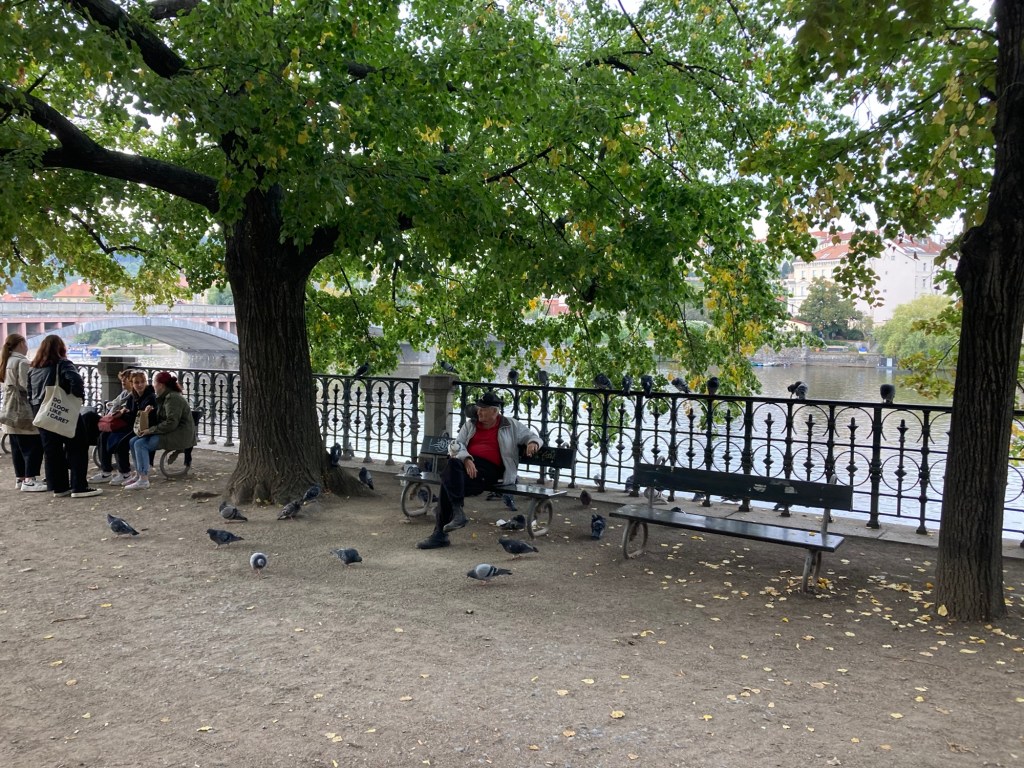
He seemed fine with it, possibly even enjoying it…
I worked through the back streets racing towards the Jewish Quarter. I eventually came upon the Jewish Ceremonial Hall (Obřadní síň). This was the beginning of Josefov.

There were people lined up outside. I believe above the ceremonial hall was the old Jewish Cemetery (Starý židovský hřbitov), which used to stack bodies in graves as it reached beyond full capacity (Jewish people had to use all the property that was given to them). There were letters outside the building in Hebrew. I could only see glimpses of crooked gravestones above, which looked like rows of crooked teeth in a shark’s mouth.
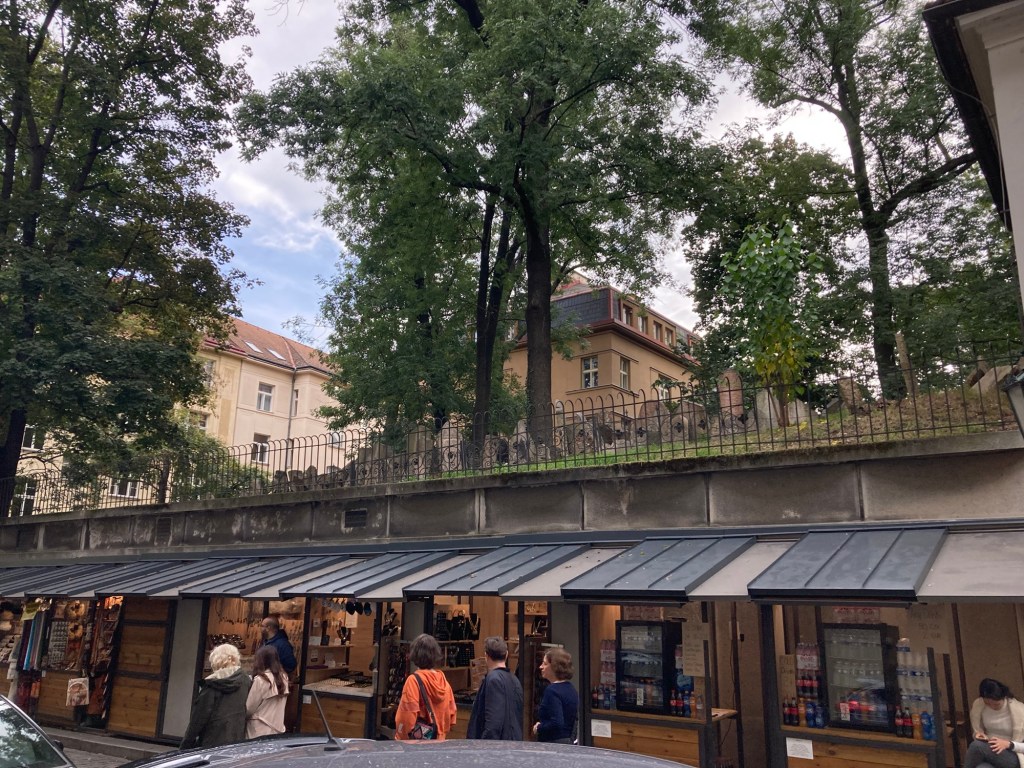
There were many interesting buildings in this part of town. As a self-proclaimed architecture fanatic; this piqued my interest. It looked wonderful. And this was an interesting part of town.

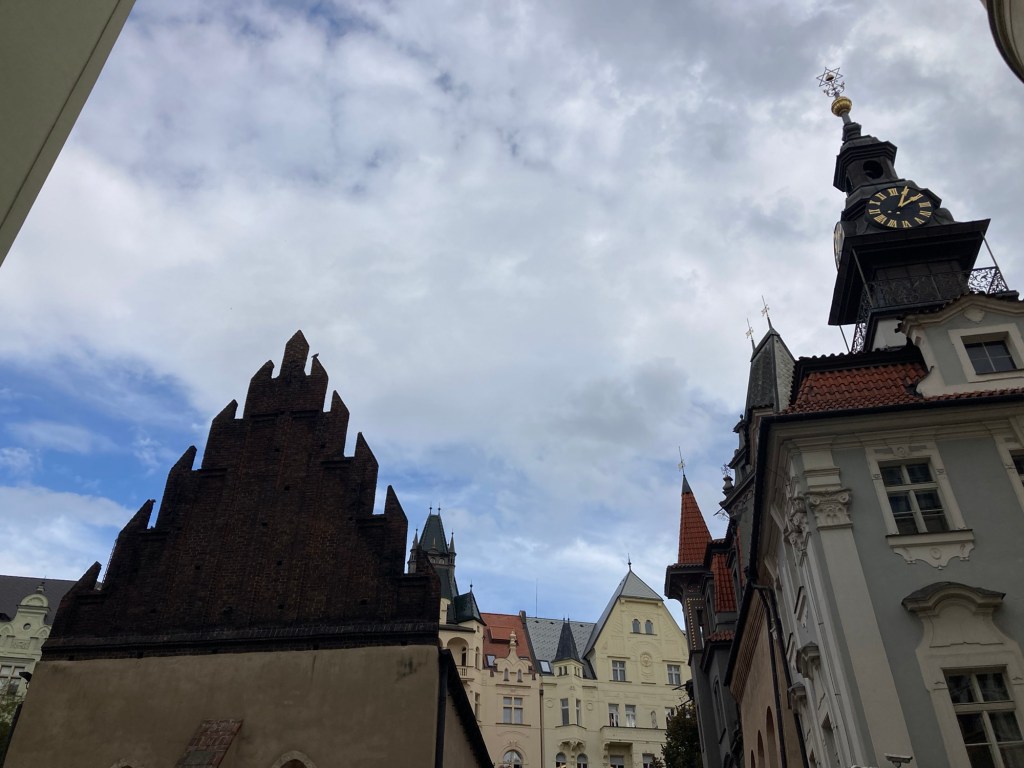

I did not enter the cemetery, as the entrance was 300 CZK, so I chose not to; I wasn’t that invested. I had my view, which was good enough.
It was quite obvious that there was a lot of history on just that street alone that I was on (U stareho hrbitova).
I did see a statue at some point in the district that was important to a Franz Kafka story, but I didn’t pay much attention to it. He is considered to be a Czech national treasure, and perhaps the most famous Czech artist ever.
At this point, I had just kept walking, and ran out of things to do, so I went back to my accommodation. It was a forty-two minute walk. It was 14:20 and I started heading back.
By 14:23, I was back in the old town square. I passed the Church of Our Lady before Týn, and really did NOT follow the same footsteps back of the way I came.
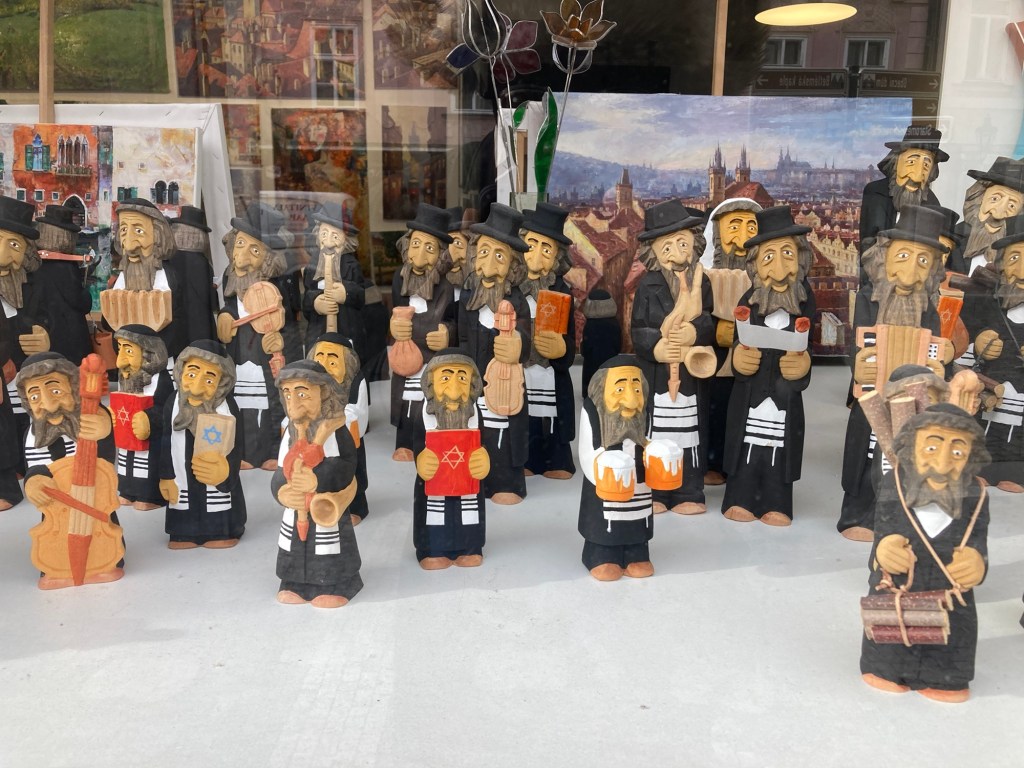
I did come across a shop with little Jewish figurines in the window. At the time, I thought it was in poor taste.

I then walked through Wenceslas Square, which I had originally passed through earlier.
Next thing I knew, I was back.
I did get back to my hostel and I did book my tickets for my next trip within the Republic. I also researched things to do in Prague. All-in-all, I spent about five hours back at my hostel just recuperating from the day I had, and planning for the next ones.
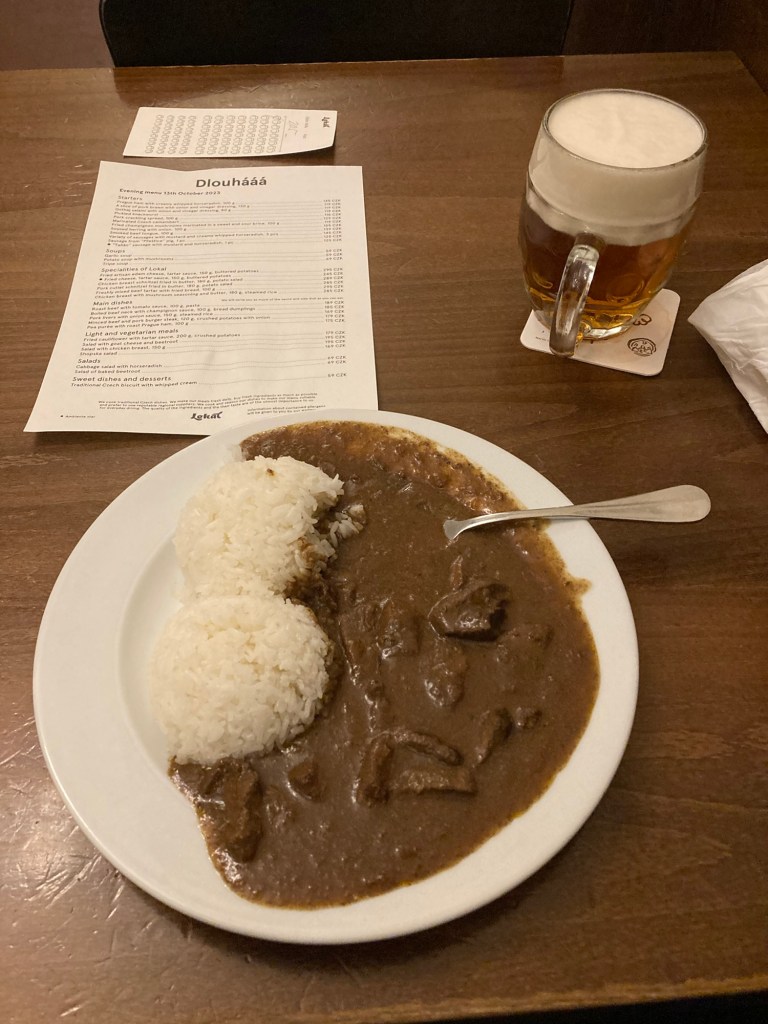
I believe I walked to the restaurant where I would be eating for the night. I think the one I originally wanted to go to wasn’t open, or there wasn’t space. When I got to Dlouhááá, the menu outside was in Czech. I translated it using my phone. There was a menu for the day, written atop as “Vecerni menu 13. rijna 2023”.
For some reason, when I went inside and tried to order, the girl just laughed and apologised and someone else took over. I think I just explained to the next person what I wanted, and they got me seated.
There was a menu brought out in English, and I saw what I wanted to order, which I had identified when I was outside; Veprová játra na cibuice, 150 g, dusená ryze (Pork livers with onion sauce, 150 g, steamed rice). The alternative was; Vareny hovèzi krk se zampionova omácka, 100g, houskové knedlíky (Boiled beef neck with mushroom sauce, 100g, bread dumplings), but I decided against it.
It didn’t take long for the food to get taken out.
I had also ordered a big beer; probably a Pilsner Urquell, which I believe came first.
And I got a rakvičky se šlehačkou (traditional Czech biscuit with whipped cream); this was delicious.
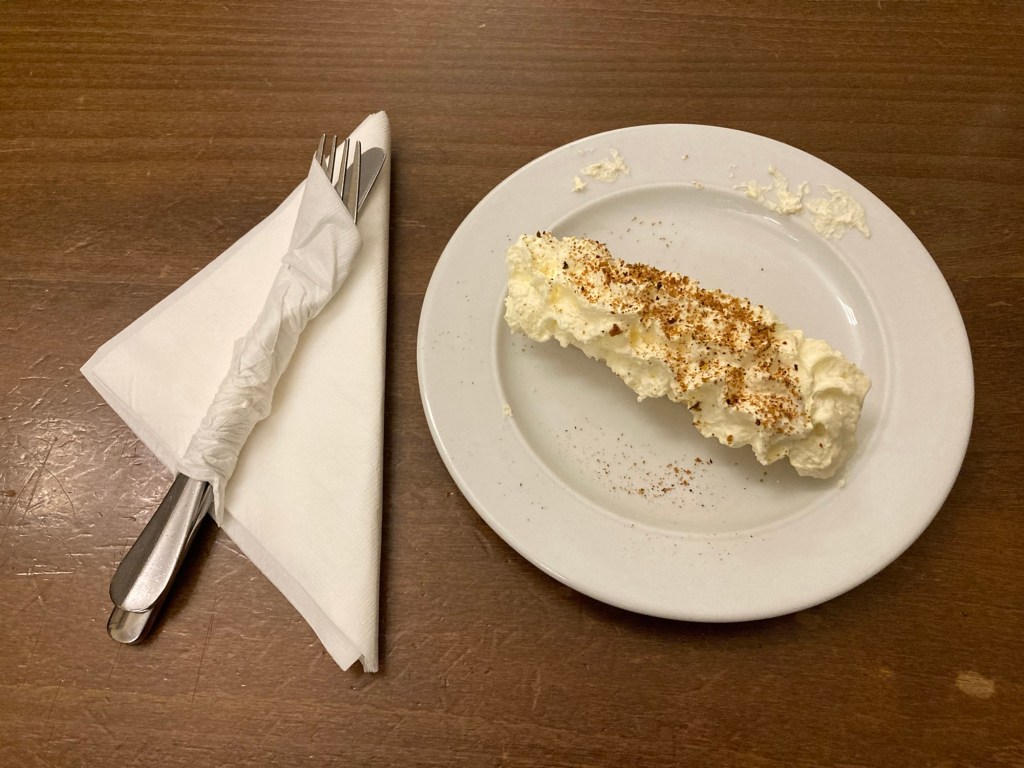
Before I left, the guy who served me told me about the tipping system in Czech. He told me I didn’t have to, but I did (probably 10%).
I left, and I eventually passed by the Powder Tower again. It was illuminated in the dark. I passed by the Henry’s Bell Tower again as well; same path I had come up from earlier that day.
At some point (and I randomly remember this, and think about it frequently), there was a silver? Rolls Royce parked on the sidewalk (pavement). Some man was walking his dog beside it in front of me. This was another ridiculous thing from the day.
I got back at maybe about eleven, or twenty-three, at night.
Discover more from Jaden Strong
Subscribe to get the latest posts sent to your email.
 Jaden Strong
One reply on “Prague, Czech Republic, Part One: An Astronomical Introduction”
sounds like an awesome trip!
LikeLiked by 1 person